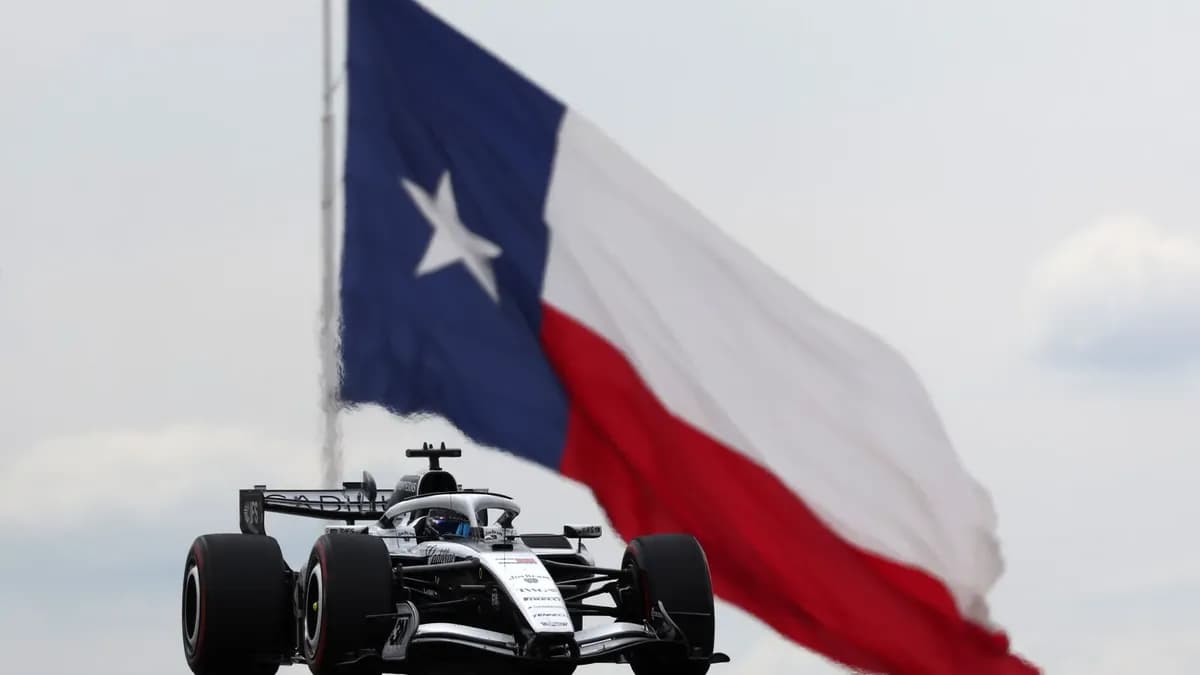
FIA Closes Red Bull and Audi Floor-Stay Loophole for 2027
Event / announcement: October 16, 2026
Red Bull’s clever sidepod trick has a limited lifespan. Updated 2027 Formula 1 technical regulations close the so-called floor-stay loophole that Red Bull and Audi have exploited this season to create an unusually sharp lower edge on their sidepods. The change first emerged in reports on 14 October, and by 16 October GPblog reported that the revised wording was already part of Issue 3 of the 2027 technical regulations, which had received formal World Motor Sport Council approval.
Formula 1’s own technical analysis, written by Mark Hughes, describes the solution as a clever regulation loophole that has been outlawed from next season. For 2026, the design remains legal, so Red Bull and Audi can continue to use it for the rest of this year. From 2027 they will need to redesign the area.
How the loophole works
The 2026 rules set minimum radius values for the corners and edges of bodywork panels. In aerodynamic terms, teams would prefer sharp edges on the sidepods, because a crisp edge helps control airflow along the undercut towards the rear of the car. The regulations deliberately prevent that by enforcing a large minimum radius. As technical analyst Craig Scarborough put it, quoted by Crash.net: “For aero you’d like sharp sidepod edges, but regs enforce a large minimum radius.”
Red Bull’s answer was to fit a floor body stay, a thin structural element running along the ridge of the sidepod. Crash.net explained that bodywork close to such a stay is permitted a much smaller radius of 20mm. By running the stay along the edge, Red Bull could legally create a far sharper profile than the general bodywork rule would normally allow. The FIA cleared the design, but it was widely seen as going against the intention of the regulations.
- Red Bull introduced the floor-stay solution at the Austrian Grand Prix in June.
- Audi introduced its own version in Baku a few rounds later.
- The loophole relies on a reduced radius permitted around floor body stays.
- The design is legal for the rest of 2026.
- Both teams will need a new lower sidepod edge for 2027.
What changes in the 2027 rules
The first reports, published by Crash.net on 14 October and attributed to AutoRacer.it, said the FIA’s technical delegates intended to reduce the relevant floor support dimension from 20mm to 5mm, which would remove the benefit. At that point the change was described as reported rather than confirmed. Two days later, GPblog said the ban was already in the rulebook and explained how the wording works.
According to GPblog, the original exploit centred on Article C3.5.14, which governs floor components. The new wording limits where thin rods are allowed to intersect bodywork, restricting them to areas next to mounting points and to defined zones on the engine cover. A supplementary regulation also stops teams from using structural stays to sharpen aerodynamic edges. The practical consequence is that the lower edge of the sidepod must meet the standard curvature limits next year.
The detailed wording described by GPblog goes further than the simple dimensional change first reported, so the exact mechanism should be read in the published regulation text when the teams start presenting their 2027 cars. What all three sources agree on is the outcome: the sharp-edged sidepod concept used by Red Bull and Audi will not be allowed in 2027.
Why the timing matters for Red Bull
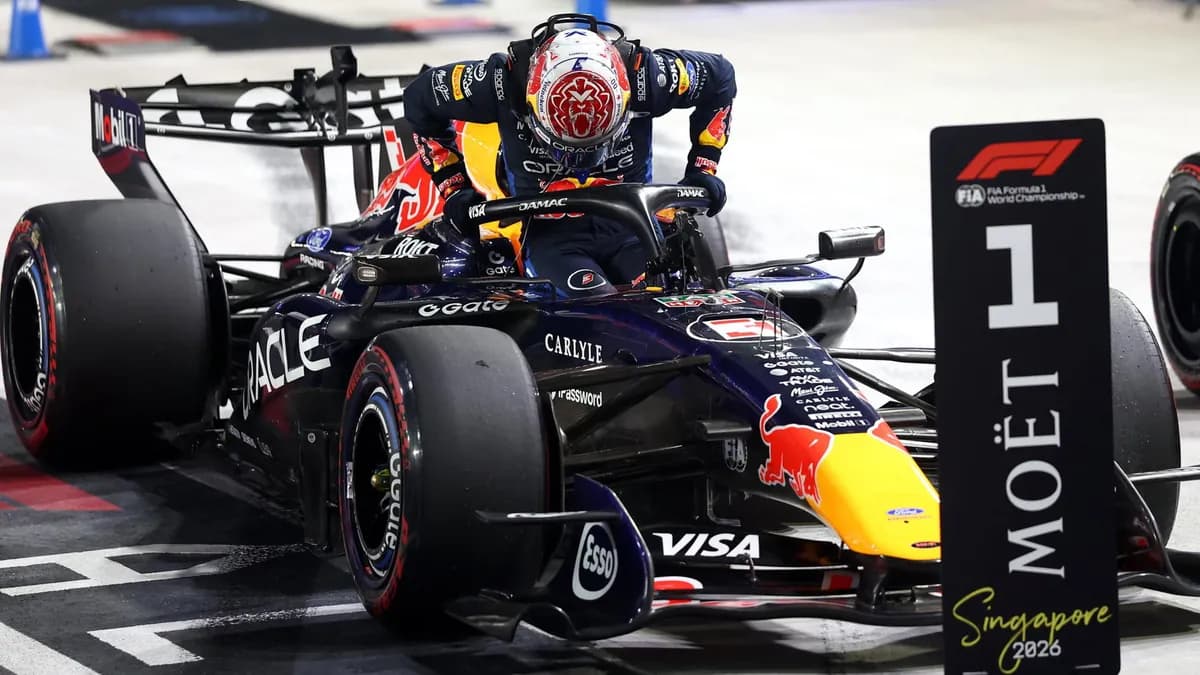
The news arrived just as Red Bull had found its form. Max Verstappen won the relocated Bahrain Grand Prix at Sepang on 4 October and then the Singapore Grand Prix a week later, his first two wins of the season. “The last few races have been really positive for us,” Verstappen said after Singapore, as quoted by Crash.net. Crash.net described the RB22 as the car to beat at those two events.
It would be wrong to attribute that form to one sidepod detail. Red Bull had already been using the floor stay since June, and Verstappen’s recent wins came in very different conditions, one in a rain-hit race in Malaysia and one on a hot night in Singapore. But it is clear the concept is part of the car’s aerodynamic package, and losing it means extra design work for 2027 at a time when every team is also preparing other rule changes for next season.
- Red Bull: must redesign the lower sidepod edge on its 2027 car.
- Audi: same requirement after copying the concept in Baku.
- Other teams: no need to chase the idea for next season.
- 2026 races: the current RB22 runs unchanged, including in Austin.
Analysis: a familiar pattern
Formula 1 has seen this cycle many times. A team finds a gap in the wording, the FIA confirms it is legal, rivals study it, and the governing body closes it at the next opportunity instead of mid-season. That approach protects teams that have invested in a legal interpretation while stopping an arms race that would push every car towards the same trick.
For Red Bull and Audi, the cost is mainly engineering time. The aerodynamic benefit came from a very specific detail, and both teams will now have to recover that lost performance in other ways. For everyone else, the decision removes the temptation to copy the concept for 2027 and lets them focus on their own development paths.
There is also a lesson for the way the 2026 rules were written. The bodywork radius limits were meant to keep car shapes rounded and reduce the aerodynamic sensitivity that made earlier generations difficult to follow. A single permitted exception for structural parts turned into a design feature, which shows how quickly teams search for any area where the rules are looser than intended. The FIA’s fix suggests it now wants such exceptions tied strictly to genuine structural needs.
The broader point is that the first season of the 2026 regulations is still producing loopholes, and the FIA is using the 2027 update to tidy them up. Teams will be watching the next issues of the rules closely, because the interpretations that win races this year may not survive into the next.
Sources
Like what you read?
Register now and put today's slate to work.