FIA Reveals Findings on Sepang Formation-Lap Software Bug
Event / announcement: October 8, 2026
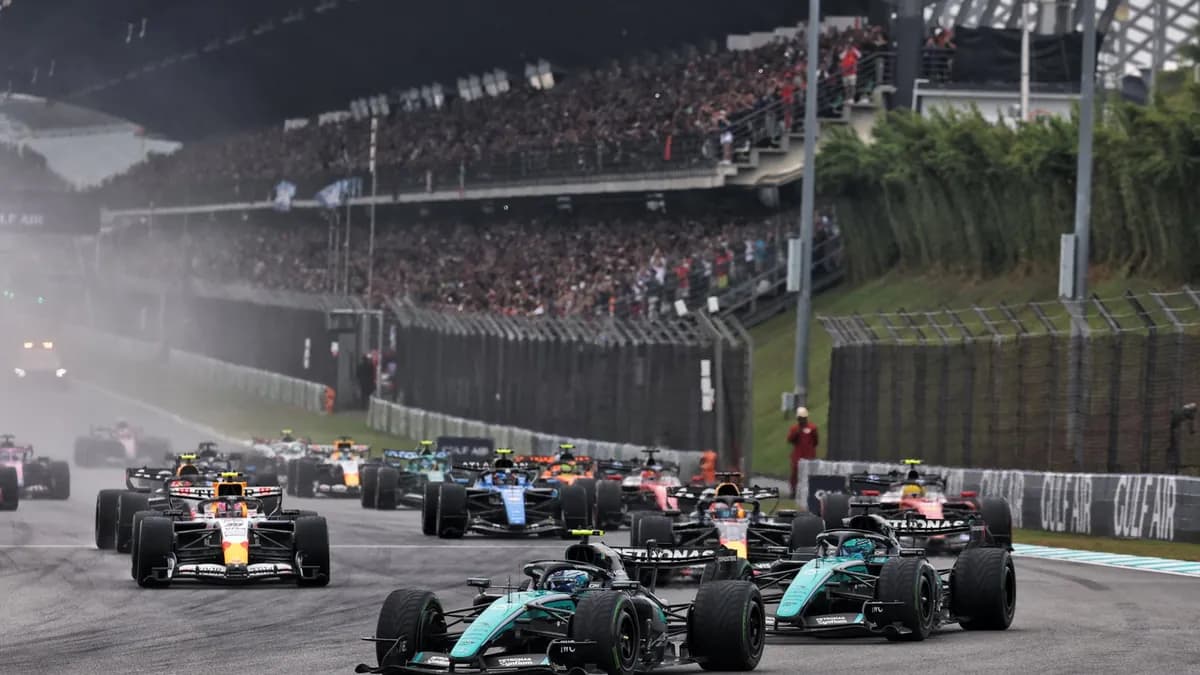
The FIA has explained what went wrong on the formation lap at Sepang. In findings reported on 8 October, the governing body said a software problem linked to the wet-weather engine settings caused several cars to lose more power than intended during the Bahrain Grand Prix, which was held in Malaysia on 4 October. The issue forced the start to be abandoned while new code was sent to teams, and the race eventually began more than an hour and a half late.
The review also set out what will change. The FIA, the teams and the power unit manufacturers will expand testing and verification of software, including independent assessment and input from the standard ECU supplier. A further update to the wet-weather software is planned for the United States Grand Prix on 25 October.
What the FIA found
The problem was specific to a combination of conditions. According to the FIA statement reported by Crash.net, “some cars running on low engine RPM in certain circuit sectors where a 250kW power reduction was applied” experienced “a loss of power beyond the original intent and that could not be recovered in those sectors.” In other words, a safety measure designed to reduce power in wet conditions went too far for some cars.
In its first statement after the race, the FIA described “an unprecedented combination of low engine speed, low-grip conditions” as the trigger, together with the wet-weather energy management settings and the way the Sepang circuit is divided into sectors. Al Jazeera, carrying a Reuters report, said the FIA admitted the issue had not been caught in testing or on the laps to the grid.
- Trigger: low engine revs in sectors where a 250kW power reduction applied.
- Effect: power dropped beyond the intended level and could not be recovered in those sectors.
- Immediate fix: an FIA software update removed the energy limit in the affected sectors during the delay.
- Longer-term fix: expanded testing, independent assessment and ECU supplier input.
- Next update: revised wet-weather software for the United States Grand Prix.
Was the software tested?
One of the strongest criticisms after the race was that the software had not been properly tested. The FIA rejected the suggestion that it was untested. Crash.net reported that teams and manufacturers had run simulations, and that the software had been used at full scale in first practice at the Belgian and Dutch Grands Prix.
The FIA’s single-seater director, Nikolas Tombazis, accepted there had been a gap. He said the cars slowed sharply, with some almost stopping, creating a “concertina effect” in the pack. He pointed to the lack of wet-weather running before the season. “I think if we had had a bit more testing, we probably would have managed to catch it in time,” he said, according to Al Jazeera. Sepang was the first race weekend of 2026 with wet conditions.
Drivers unimpressed
The drivers who were caught out did not hide their frustration. Lewis Hamilton had to stop on track and restart his Ferrari’s power unit, which he described as a first in his career. Max Verstappen, who went on to win the race, compared the experience to a “Lego race”. Carlos Sainz said Formula 1 “needs to have a hard look at” itself.
Those comments fit a wider pattern. Drivers have been unhappy since the opening round about the larger electrical component of the 2026 power units and the amount of energy management the rules demand. A failure that left cars stranded before the start, in front of a large crowd at a circuit returning to the calendar for the first time in years, was a public embarrassment.
- Hamilton: stopped on the back straight and restarted his power unit.
- Verstappen: among the drivers affected, then won the race.
- Haas and Cadillac cars: also stopped during the formation lap.
- Sainz: called on the sport to take a hard look at itself.
What happens next
The first test of the response comes immediately. For the Singapore Grand Prix weekend, which includes the final sprint of the season, the FIA will reinstate the configuration used after the fix at Sepang if similar wet weather is expected. The further software update is planned for Austin later in October.
The bigger lesson concerns how software is approved. Modern Formula 1 power units are governed as much by code as by hardware, and the FIA’s promise of independent assessment and wider verification is an acknowledgement that the current process did not account for every combination of conditions. Rain is rare in the dry pre-season tests, so wet-weather software is the area most likely to contain hidden problems.
Analysis: a warning, not a scandal
The Sepang failure did not affect the sporting result, because cars were returned to their original grid positions and the race ran in full. But it showed how fragile a highly managed hybrid formula can be when conditions move outside what has been rehearsed. The FIA’s detailed explanation is a step towards restoring confidence, and the real judgement will come the next time it rains on a race weekend.
The episode also highlighted how much responsibility now rests with standardised software. Every car uses the same electronic control unit, and changes to energy management settings are distributed by the FIA. When that software behaves unexpectedly, the problem affects the whole field rather than a single team. That explains why the review recommended involving the ECU supplier directly and adding independent checks before new versions are released.
Teams will also want clarity on how wet-weather power settings are managed in future. The FIA said it would look at the precise cause, mitigation measures and learnings from team and manufacturer data. For engineers, the key question is whether they can trust the settings to work as expected when the next wet race arrives.
For Malaysian fans who waited through the delay at Sepang, the explanation arrives as the region’s second race weekend in a row begins in Singapore, on the same local time.
How to read the next chapter
Sources
Like what you read?
Register now and put today's slate to work.