Las Vegas Strip Circuit Guide Ahead of the 2026 Grand Prix
Event / announcement: September 7, 2026
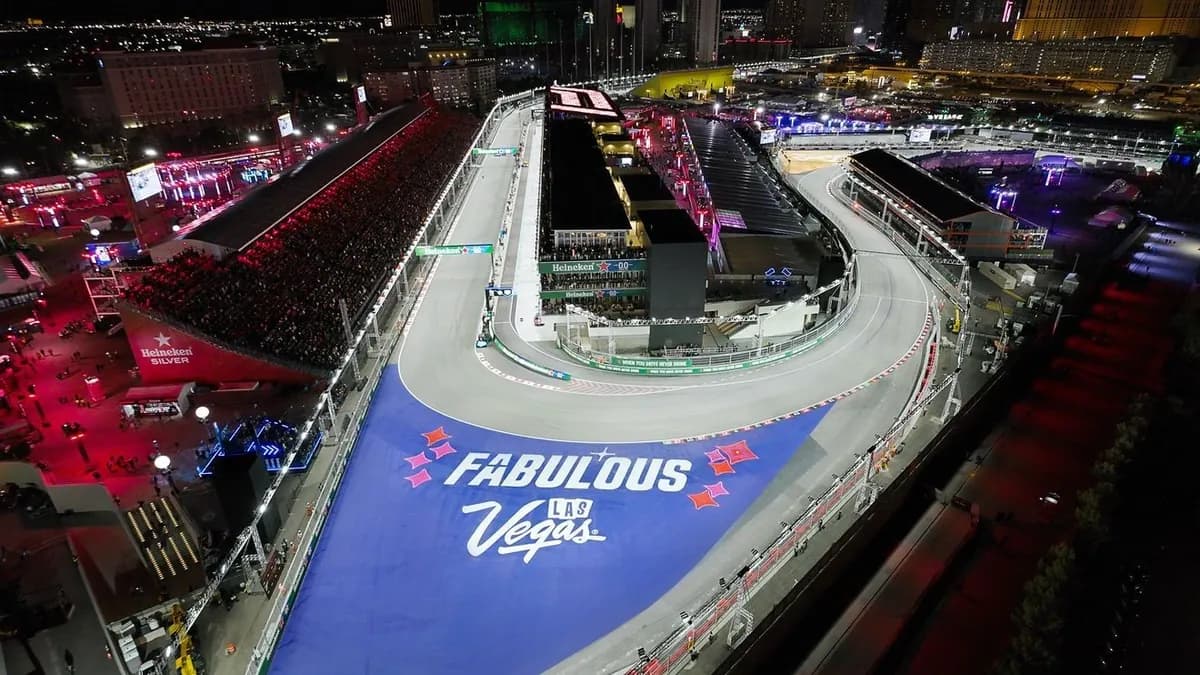
Ten days from now, the Formula 1 Heineken Las Vegas Grand Prix 2026 brings the championship back to the Las Vegas Strip Circuit from 19 to 21 November. The city has been preparing for weeks. Local broadcasters reported that road work for the event began at the end of August, with overnight lane closures around the resort corridor and track lighting installed in September. By the time the cars arrive, the familiar public roads will have been transformed into one of the fastest street circuits Formula 1 has ever raced on.
This guide explains what makes the circuit distinctive, how the first three editions unfolded and the factors teams will weigh as they plan for a cold Saturday night in Nevada. A full session-by-session preview in Malaysia time will follow closer to the event. The support bill again includes F1 Academy, whose practice, qualifying and two races are spread across the same three evenings as the Grand Prix sessions.
The Strip Circuit in numbers
- Circuit length: 6.201 km, with 17 corners
- Race distance: 50 laps, 309.958 km
- Lap record: 1:33.365, Max Verstappen, 2025
- First modern Grand Prix: 2023
- Main feature: a run of around 1.9 km along the Las Vegas Strip
- Race start: 8pm local on Saturday 21 November, noon on Sunday in Malaysia
Designed by Tilke, the layout runs past many of the Strip's best-known casinos and hotels. The long blast down Las Vegas Boulevard is the defining feature, but it is not the only straight: two other lengthy flat-out sections mean that a large share of the lap is spent at full throttle. The corners in between are mostly slow, tight street-circuit turns, which create heavy braking zones at the end of the straights and give drivers chances to attack.
The pit and paddock complex, known as the Grand Prix Plaza, sits on a permanent site off the Strip, and the opening corners wrap around it. On race night the area is lit up, with grandstands lining the run to Turn 1. It is a striking setting, but it also means the cars run on a surface that carries normal traffic for most of the year, so grip levels are low at the start of the weekend and improve as rubber is laid down.
A short history: 2023 to 2025
Las Vegas had hosted Formula 1 before, at a temporary circuit in the car park of Caesars Palace in the early 1980s, with the 1982 Caesars Palace Grand Prix the last previous race in the city. The modern event arrived in 2023, and Max Verstappen won the first edition for Red Bull. In 2024, George Russell took victory for Mercedes, and in 2025 Verstappen won again, leading Russell and Kimi Antonelli home.
The 2025 result was confirmed only after a dramatic post-race ruling. Lando Norris and Oscar Piastri, who had crossed the line second and fourth, were both disqualified after their McLarens' planks were found to have worn below the 9mm minimum. The team blamed unexpected porpoising in the race. The case is a useful reminder of how this circuit can catch teams out: a combination of long straights, a bumpy street surface and limited practice running can push cars beyond what simulations predict.
- 2023 winner: Max Verstappen (Red Bull)
- 2024 winner: George Russell (Mercedes)
- 2025 winner: Max Verstappen (Red Bull), with both McLarens disqualified
- 2025 pole position: Lando Norris
- The race was moved to an 8pm local start from 2025
The key factors for teams
Temperature is the first challenge. The race takes place on a late November night in the desert, and track temperatures can be very low compared with almost every other Grand Prix. Tyres need heat to work, and a car that struggles to warm its tyres can lose large amounts of time over a single lap. Graining, where the surface of a cold tyre tears and then rolls, is a constant risk in these conditions.
Energy is the second. The 2026 regulations replaced DRS with active aerodynamics and introduced an overtake mode, giving a following driver extra electrical energy when close behind. On a lap dominated by full-throttle sections, energy recovery and deployment become central. A driver who has to defend down the Strip may have little left for the next straight, and teams will spend Friday working out where to harvest and where to spend.
Set-up is the third. Running the car low improves aerodynamic performance, but Las Vegas punishes too much ambition, as McLaren discovered last year. Engineers will want enough ride height margin to protect the plank, even at the cost of some lap time.
- Cold tyres and graining on a low-grip public road surface.
- Energy harvesting and deployment on three long straights.
- Heavy braking zones that create overtaking chances.
- Ride height choices that balance speed against plank wear.
- Track evolution, as grip rises sharply over the weekend.
How the city prepares
Building a street circuit in the middle of a working city takes months. News 3 Las Vegas reported overnight lane reductions on Koval Lane in early September and on Harmon Avenue from 7 to 18 September, between 9pm and 6am, with one lane kept open in each direction. FOX5 Vegas reported that track lighting work was under way in the same period, including in the pit area. Organisers launched an interactive website showing build and dismantle schedules and a text alert service for residents and visitors.
Those details may seem far removed from the racing, but they explain why the Las Vegas event looks the way it does. The circuit is assembled around a city that never really stops, and the schedule is designed to keep the Strip moving while the cars run late into the night.
For Malaysian viewers, Las Vegas offers one of the most convenient time slots of the season, with qualifying at lunchtime on Saturday and the race at noon on Sunday. It is also one of the most unpredictable venues on the calendar, and the new 2026 cars will be tackling it for the first time. Even teams with a strong record here will arrive with plenty to learn.
Sources
Like what you read?
Register now and put today's slate to work.