Pirelli Targets Higher-Degradation F1 Tyres for 2027
Event / announcement: September 28, 2026
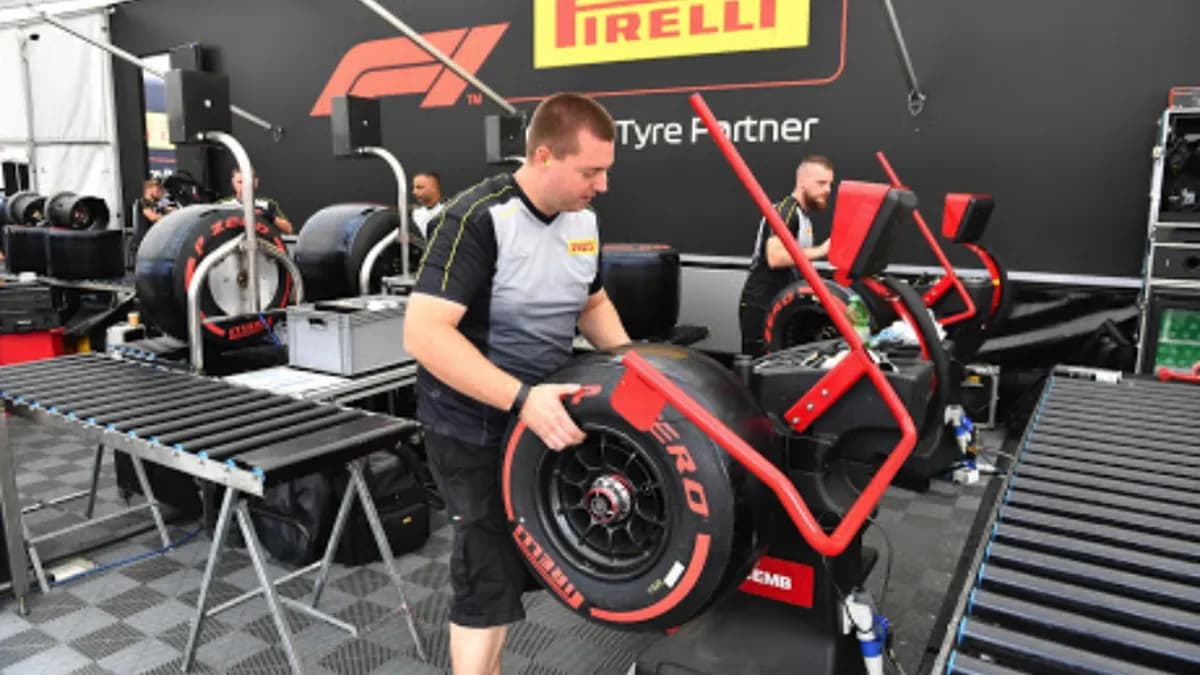
Pirelli is deliberately building more degradation into the Formula 1 tyres it will supply for 2027. The plan, detailed by The Race on 28 September and reported by GrandPrix.com a day later, follows a 2026 season in which one-stop strategies have become the default answer at most circuits. Nine of the first 15 Grands Prix of the year were predominantly one-stop races, and the Azerbaijan Grand Prix offered another example of tyres that showed little wear or graining.
The aim is not simply to make rubber wear out faster. Pirelli wants to widen the range of strategies that can work and reduce the number of races in which the obvious plan is clear before the lights go out. That is a subtle target, because higher degradation can also produce the opposite of what fans want: drivers lapping below the limit to protect their tyres.
What Pirelli has said
Pirelli chief engineer Simone Berra told The Race that the company’s 2027 development work was focused on the tyre structure rather than on car balance. The manufacturer has tested different constructions intended to generate more heat, and therefore more thermal degradation, at either the front or the rear axle. The idea is to give engineers a tyre that asks harder questions over a stint, instead of one that can be pushed from pit stop to flag.
Berra also explained why the company believes its picture is clearer this time. For the 2026 tyres, Pirelli had to rely heavily on team simulations and mule cars, and The Race reported that downforce predictions from different teams varied by as much as 30 percent. For 2027, Pirelli has been able to test with the real 2026 cars, complete with the current power units. “We have worked this year, not with the mule car but with the real cars from this year,” Berra said, adding that this gave Pirelli a much better understanding.
- Nine of the first 15 Grands Prix of 2026 were mostly one-stop races.
- Pirelli is changing tyre construction to create more heat and thermal degradation.
- Ferrari and Racing Bulls completed around 400 laps of 2027 tyre running at Imola.
- Ferrari’s test running involved Lewis Hamilton and Charles Leclerc, according to The Race.
- Further 2027 tyre testing, including wet-weather work, was scheduled for Magny-Cours in mid-October.
Why one-stop races became the norm
The 2026 regulations changed the cars substantially, and tyre development had to start before anyone knew exactly how much load the new machines would put through their rubber. When a supplier is uncertain, the safe option is to build in margin. A tyre that proves too durable produces predictable racing, but a tyre that proves too fragile can create safety and sporting problems. It is easy to understand why the first generation of tyres for a new rule set leaned towards robustness.
The consequence has been visible on track. When a single stop is clearly quickest, teams converge on similar plans, pit windows open and close within a few laps of each other, and the main strategic variable becomes the timing of a Safety Car. Baku showed how much a neutralisation can reshape a race when the tyres themselves are not forcing decisions. Russell’s commanding lead was wiped out by a Safety Car rather than by any tyre problem.
One-stop racing is not automatically dull. Tyre management over a long stint rewards precision and can produce late pressure when one driver has looked after the rubber better. But a season in which most races follow the same pattern removes one of the tools that allows a faster car to recover from a poor grid slot or a slower car to steal a result through bold thinking.
The balance Pirelli must strike
Higher degradation creates options only if the performance drop is large enough to make an extra stop attractive but not so large that every driver simply nurses the tyres. The best outcome is a tyre where a two-stop plan and a one-stop plan are close enough in total race time that teams genuinely disagree, and where a driver on fresher tyres can attack rather than merely wait. That calibration is difficult, and it changes from circuit to circuit.
Thermal degradation is a particular kind of wear. A tyre that overheats loses grip quickly, but a driver can sometimes recover performance by backing off for a lap or two. That gives drivers a choice between pushing now and paying later or managing temperatures to stay in a useful operating window. Choosing whether the front or rear axle carries more of that limitation also changes how the car behaves, which will influence set-up and driving style.
The interaction with the 2026 power units matters too. Energy deployment has become a major factor in overtaking, and drivers already manage battery use carefully. Adding more tyre management on top of energy management could either create richer racing or produce too many compromises. Pirelli and the sport will be watching closely to see which way the balance tips.
What to watch as the testing continues
- Whether teams report clear differences between the prototype constructions tested so far.
- How the wet-weather running at Magny-Cours informs Pirelli’s intermediate and full-wet options.
- Whether the final 2027 compounds make two-stop races competitive at more venues.
- How drivers describe the balance between attacking and managing on the new tyres.
- Whether teams need to change set-up philosophy to cope with front- or rear-limited degradation.
Magny-Cours will be useful because the French circuit has an artificial watering system, allowing Pirelli to create repeatable wet conditions. Wet tyres have had limited use during 2026, so controlled running offers valuable information that normal race weekends cannot always provide. Dry-weather work, meanwhile, will continue to refine the constructions and compounds before the final specifications are chosen for next season.
For Malaysian fans, whose home circuit was added to the 2026 schedule to stage the Bahrain Grand Prix in Malaysia, tyre behaviour in heat is a familiar talking point. Sepang has historically been one of the harsher venues on rubber, which makes it a useful reference for what higher degradation can look like. The question for 2027 is whether Pirelli can bring more of that strategic tension to a wider range of circuits without turning every race into a management exercise.
The early signs are that Pirelli has a clearer brief and better data than it had a year ago. Real cars, real power units and a defined target give the company a stronger basis for its decisions. The outcome will only be judged once the 2027 season starts, but the direction is clear: Formula 1 wants its tyres to create more decisions, and Pirelli has set out to provide them.
Sources
Like what you read?
Register now and put today's slate to work.