Brighton Recover from Two Down to Knock Manchester United Out
Event / announcement: September 16, 2026
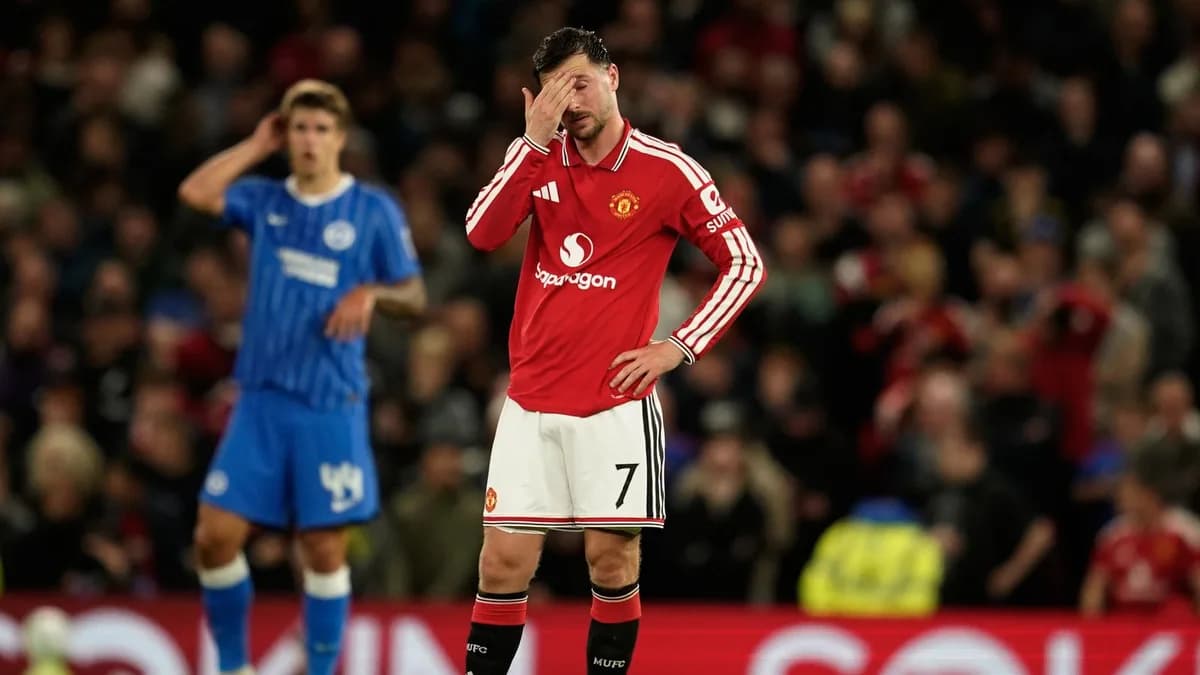
Brighton came from two goals down to beat Manchester United 3-2 at Old Trafford on 16 September, advancing to the Carabao Cup fourth round. United's strong opening was undone by a comeback that began before half-time and was completed midway through the second period.
Shea Lacey scored after eight minutes and Mason Mount added another two minutes later. Charalampos Kostoulas reduced the deficit in first-half stoppage time, before Pascal Gross equalised and Maxim De Cuyper put Brighton ahead. The result ended United's cup campaign at its first hurdle.
Five goals that reversed the contest
- Lacey gave United the lead in the eighth minute.
- Mount made it 2-0 in the tenth.
- Kostoulas replied in first-half added time.
- Gross brought Brighton level in the 65th minute.
- De Cuyper scored the winner four minutes later.
The sequence left the two teams with sharply different accounts of the evening. Brighton recovered from a poor start; United could not turn an early advantage into a completed result.
Analysis: the lead arrived before the match had settled
Two early goals can create the impression that the main work is already done. In reality, a team still has most of the match to manage. The opponent has time to adjust, and the side in front has to decide how to use the ball and space available without losing its structure.
That is a different task from producing the opening goals. An attack may work because the opponent has not yet established its defensive rhythm. Once the game changes, the same route may be less available. The leading side needs to recognise those adjustments and find a sustainable way to continue competing.
For United, the final result makes that distinction unavoidable. The opening phase showed an ability to hurt Brighton. The rest of the match raised questions about how effectively the team responded when the visitors began to recover. A review that focuses only on the start would miss the period that decided the tie.
The goal before the interval changed Brighton's position
A reply close to half-time can have a substantial practical effect. A team that was facing a two-goal deficit goes into the break needing one successful attack to draw level. The discussion can focus on completing a recovery that has already begun, rather than finding a first route back into the game.
For the side that concedes, the interval offers a chance to reset. The previous margin no longer exists, and the next half has to be planned around the current score. That requires a clear understanding of what created the concession and which adjustments are needed to prevent the same problem from returning.
The timing matters, but it does not make the subsequent outcome inevitable. Brighton still had to produce the next decisive actions. The goal changed the opportunity available; the second-half performance converted that opportunity into a winning position.
An equaliser demands another immediate adjustment
When a team loses a lead, there can be a short period in which players are still reacting to the concession while the opponent is already preparing the next attack. Communication becomes important because different players may respond differently: one steps forward to recover the advantage, another remains deeper to avoid conceding again.
If those reactions are not connected, gaps can appear between the lines. The problem is not simply whether the team is attacking or defending. It is whether the players are making compatible decisions about the same situation.
The short interval between Brighton's second and third goals makes that phase central to the account. United had little time to establish a stable response before the score changed again. Brighton's task was to continue using the openings available without treating parity as the final objective.
A comeback needs contributions beyond the scorers
The players who finish the moves supply the visible turning points, but a recovery also depends on the actions that allow those chances to exist. Retaining possession under pressure, offering a passing angle and reacting quickly to a loose ball can keep an attack alive long enough for the decisive opportunity to appear.
The defensive work matters too. A side chasing a deficit cannot afford to concede every time it commits players forward. It needs enough cover to manage the opponent's counterattack and enough organisation to restart its own pressure after a turnover.
For Brighton, the value of the evening is therefore broader than the individual finishing moments. The team recovered its position in the game and maintained the effort long enough to complete the reversal. Those connected contributions are what make a comeback repeatable in principle, even though the exact circumstances will differ next time.
United's review has two separate questions
The first is why the advantage was lost. That includes the defending around the goals and the decisions made as the match changed. The second is what happened to the team's own attacking threat after the opening period. A side that cannot retain an outlet may face repeated pressure even when its defenders initially cope well.
Those questions should be considered together. Better defending can prevent a concession, while more effective use of possession can reduce the number of situations that need defending. Treating them as unrelated departments risks overlooking how one problem feeds the other.
- Could United keep the ball in useful areas once Brighton adjusted?
- Were the distances between the defensive and midfield lines manageable?
- Did the response to the equaliser create a shared plan or conflicting movements?
- Which parts of the strong opening remained available later in the game?
Brighton's fourth-round place is the concrete outcome. For United, the cup exit leaves a demanding review of an evening that began with an ideal score and ended in defeat. The match demonstrates how quickly an advantage can disappear when the next phase is not managed effectively, and how a team that stays involved after a difficult start can turn the entire contest around.
Sources
Like what you read?
Register now and put today's slate to work.