Liverpool Knock Tottenham Out as Szoboszlai Caps 3-1 Cup Win
Event / announcement: September 15, 2026
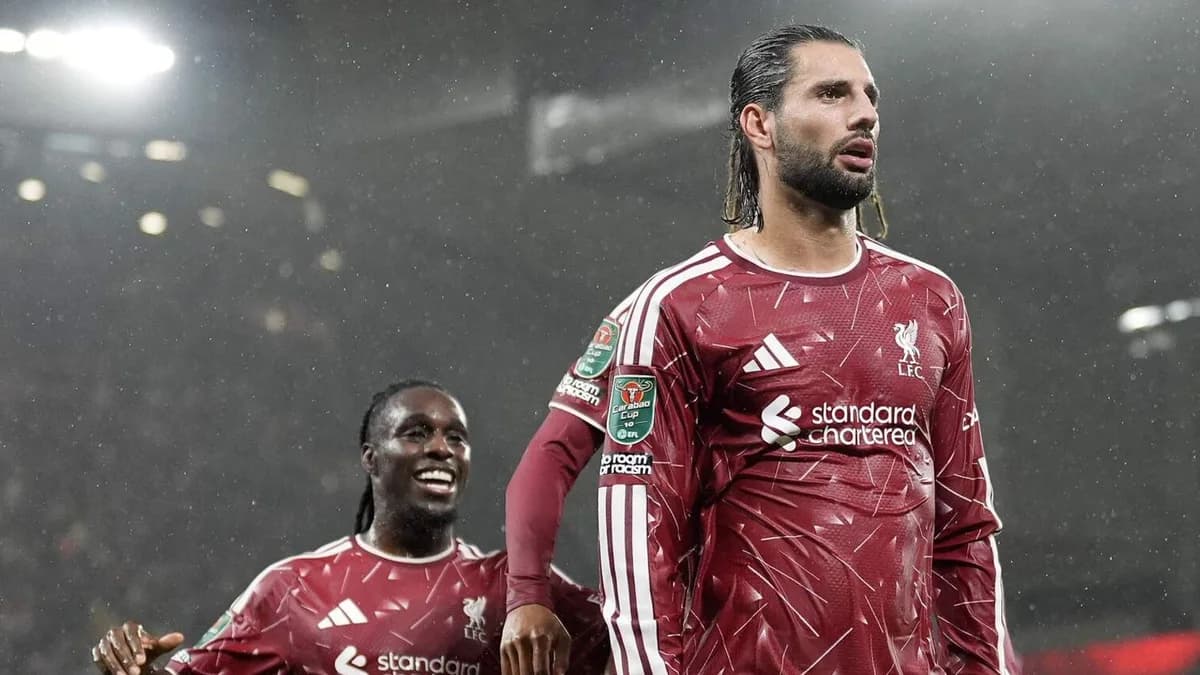
Liverpool reached the Carabao Cup fourth round with a 3-1 victory over Tottenham at Anfield on 15 September. Alexis Mac Allister opened the scoring, Cody Gakpo added a second and Dominik Szoboszlai settled the tie with a long-range strike in stoppage time after Conor Gallagher had brought Spurs back into contention.
The result supplied a completed answer to the September fixture announced earlier in the month. Liverpool advanced, Tottenham exited, and a match that became tense again at 2-1 ended with a two-goal margin. The scoreline captures the outcome; the sequence of the goals explains why the closing stages still mattered.
How the goals arrived
- 21 minutes: Mac Allister put Liverpool ahead.
- 54 minutes: Gakpo extended the lead.
- 69 minutes: Gallagher reduced the deficit for Tottenham.
- 90+1 minutes: Szoboszlai made it 3-1.
Liverpool's official report describes Mac Allister meeting Rio Ngumoha's pass with a first-time finish from the edge of the area. Gakpo then drove across goal from inside the box after the interval. Gallagher's header from a corner reopened the contest before Szoboszlai's late strike removed the remaining doubt.
A heavily changed Liverpool side still had to function as a team
Andoni Iraola made ten changes from Liverpool's weekend fixture against Fulham. Ronald Araujo was the only player to retain his place in the starting eleven, while Joe Gomez returned for his first appearance of the season and took the captain's armband.
That level of change makes the result interesting beyond the score. A different lineup has to establish its connections immediately: who offers the supporting pass, who covers when a teammate moves forward and how the group reacts after losing the ball. The names on the team sheet are only the beginning of that process.
For players receiving an opportunity, the challenge is to contribute without treating every touch as an individual audition. An effective pass or well-timed supporting run can help the unit more than a forced attempt to produce a highlight. Liverpool's advancement gives the changed side a positive outcome, while the performance offers the coaching staff evidence about combinations that may be needed again.
The first goal rewarded the connection before the finish
Mac Allister's opener combined a pass into a useful area with an immediate strike. The value of a first-time finish is partly that it reduces the interval in which defenders and the goalkeeper can adjust to the receiver's next action. The delivery therefore matters as much as the decision to strike quickly: it has to arrive where that action is possible.
For a supporting player, finding the edge of the area can create a different threat from another run directly towards goal. Defenders protecting the central space then have to account for a receiver behind or outside the nearest line of pressure. Ngumoha's contribution and Mac Allister's finish show why the movement and the pass belong in the same explanation as the scorer.
That does not imply that every similar move will produce a goal. It identifies what made this particular connection useful. A team can work to create the same kind of receiving opportunity even when the eventual finish takes a different form.
Gakpo's second changed the size of Tottenham's task
Liverpool's second goal increased the visitors' requirement from finding an equaliser to finding two goals to restore parity. It also gave the home side more room to absorb a setback, though Gallagher's later header showed how quickly that room could narrow.
A two-goal lead can create a difficult judgement for the team holding it. Continuing to attack may produce the goal that ends the contest, but losing possession with too many players committed can give the opponent a route back. Becoming too passive creates another risk by inviting repeated attacks. The best response depends on the positions and options available, not simply the number displayed on the scoreboard.
At Anfield, the next goal belonged to Tottenham. That changed the immediate purpose of the remaining minutes and ensured Liverpool still had work to do before the tie was secure.
Gallagher's header brought the set-piece threat into focus
A corner can provide a route to goal that differs from the patterns of open play. The ball is delivered into a prepared contest, and the outcome can turn on movement, marking and the first decisive contact. Tottenham used that opportunity to reduce the deficit and restore the possibility of a comeback.
For the team defending the lead, the concession also creates a need to reset. The previous margin no longer exists, and the next passage should be managed according to the new score. That requires clear decisions rather than continuing as though the earlier comfort still applies.
The match remained live at 2-1. Liverpool's final goal was important because it changed that situation, not merely because it made the winning margin look more emphatic in the final record.
Szoboszlai gave the closing stages a decisive ending
The stoppage-time strike completed the scoring from distance and restored Liverpool's two-goal cushion. A late goal of that kind removes much of the uncertainty for the leading side and leaves the opponent with very little time to respond.
It also gives the three Liverpool scorers distinct roles in the account. Mac Allister established the lead, Gakpo expanded it and Szoboszlai secured it after Tottenham had responded. Treating the goals as a simple list would miss how each changed the competitive situation.
What Liverpool can take from the tie
- A heavily rotated lineup produced a winning result and another round of cup football.
- The opening goal showed the value of a well-connected delivery and first-time finish.
- Tottenham's response kept the match competitive and required Liverpool to manage a narrower lead.
- The late third goal converted the remaining uncertainty into a clear final outcome.
Liverpool's cup progress was built from several contributions rather than one uninterrupted period of comfort. Spurs found a route back, but the home side supplied the final decisive action. The result leaves Liverpool in the competition and provides a useful performance record for players whose opportunities may vary across the different demands of the season.
Sources
Like what you read?
Register now and put today's slate to work.