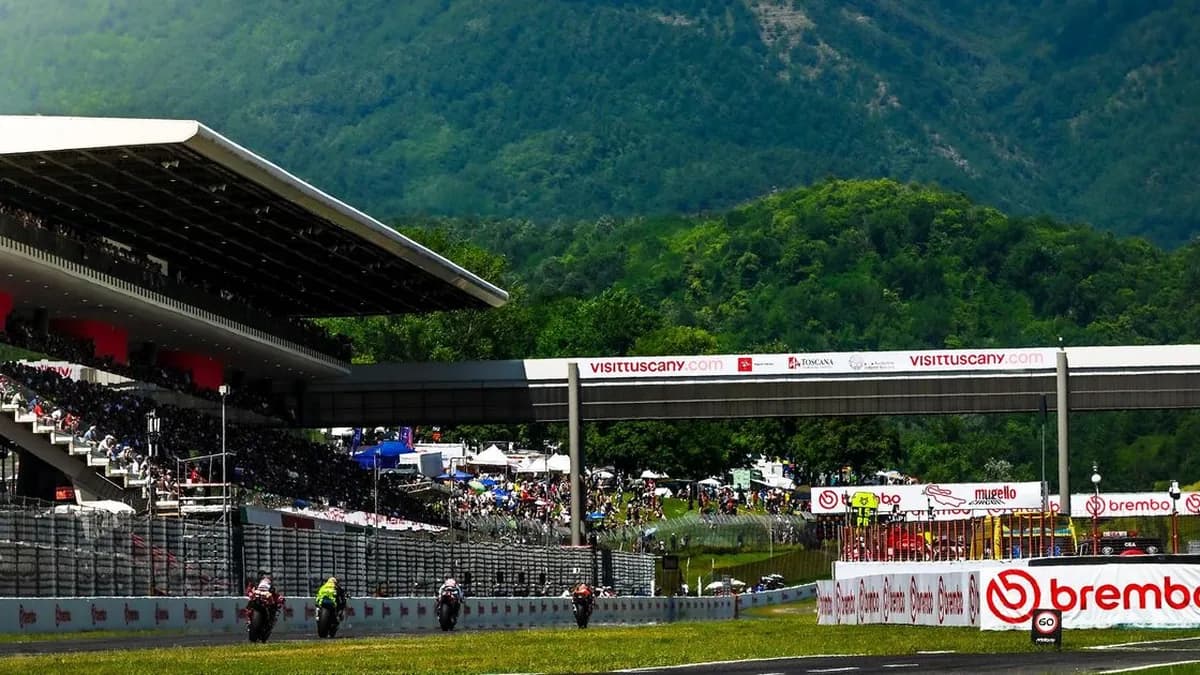
Marquez Completes Aragon Double and Closes to 19 Points Behind Martin
Event / announcement: August 30, 2026
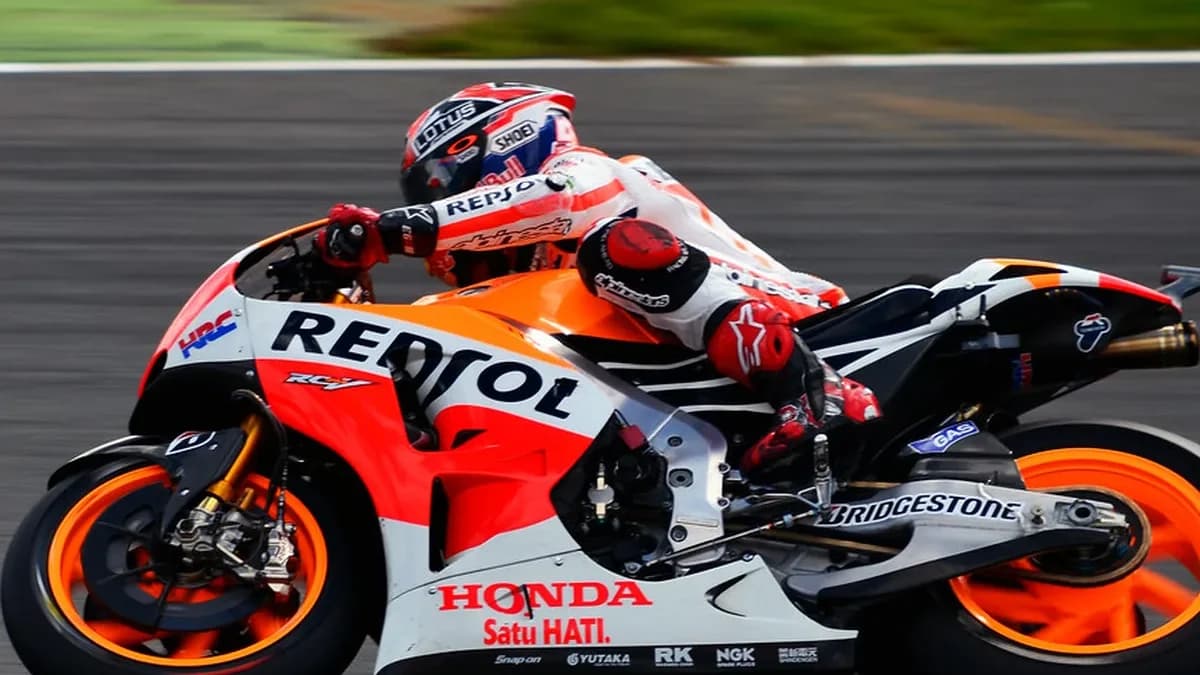
Marc Marquez won the Aragon MotoGP Grand Prix on 30 August 2026, beating Pedro Acosta and Marco Bezzecchi to complete a weekend double. After his Sprint victory on Saturday, the Sunday result brought his MotorLand total to 37 points.
Acosta supplied the closest challenge and finished second for KTM. Bezzecchi took third for Aprilia, adding another podium to his Sprint result. Marquez's victory moved him into second place in the championship, 19 points behind Jorge Martin.
The official race classification records Marquez's winning time as 41:10.969, with Acosta 1.754 seconds back and Bezzecchi 3.629 seconds behind. Alex Marquez finished fourth. The championship picture tightened after a weekend in which the Sunday winner collected the full available haul across both races.
Those points gaps describe the standings immediately after Aragon. They are a dated snapshot, not a live championship table. For readers following the title contest through September, that distinction matters: later results can change the order even while the account of this particular weekend remains accurate.
Key facts
- Grand Prix podium: Marquez, Acosta, Bezzecchi.
- Marquez earned 37 points across the Sprint and Grand Prix.
- Post-Aragon championship gap: Marquez 19 points behind Martin.
P777 Sport analysis
Why a double changes the weekend's value
Winning both races is valuable because it converts two separate opportunities rather than relying on one strong Sunday. A rider has to execute the start and manage the contest again, even after Saturday has gone well. The combined outcome therefore says something about the completeness of the weekend. It should still be described within that weekend, rather than turned into a guarantee about the remaining season.
There is a difference between a points haul and a prediction. The points already earned are part of the record; the points still available will depend on races that have not happened. A strong weekend can narrow a gap quickly, but the same arithmetic can work in another direction at the next event. That is why the post-race standings deserve both attention and a clear date.
Acosta changes the Sunday podium
The change in the runner-up position gives the Sunday race its own identity. A weekend is not one continuous classification, and riders can produce different outcomes in its separate contests. For readers comparing the two reports, identifying that change is more useful than compressing the whole event into a single broad statement about who looked quick.
A runner-up finish also deserves attention on its own terms. Finishing close to the winner establishes the final margin, but it does not reveal every phase of the pursuit. To describe specific attempted passes, tyre behaviour or mechanical limitations would require additional evidence. The careful conclusion is the one the classification supports: Acosta was the closest finisher to Marquez in the Grand Prix.
A three-way title discussion requires three perspectives
When several riders remain involved in a title contest, a race can improve one comparison while complicating another. A rider can gain on the leader yet lose a position to someone who scores more strongly. That is why championship analysis needs to identify both the gap to first and the order among the challengers. A single phrase such as gaining momentum can conceal those different movements.
The practical lesson for supporters is to compare dated standings after each round. Start with the leader, then check how each closest challenger has moved relative to that rider and to one another. This produces a clearer account than adding emotional weight to every good or bad afternoon. The table is the result of accumulated points, even when the individual races that created it were dramatic.
The value of reading the margin carefully
A narrow finishing gap suggests that the nearest challenger remained relevant to the result, but it is not a complete measure of pressure throughout the race. The gap at the flag and the gap on an earlier lap can differ. A leader may manage the closing phase, while a pursuer may encounter traffic or a mistake. Those are possible mechanisms in racing generally, not claims about undocumented moments in this event.
The same principle applies further down the order. Riders finishing only a few seconds apart may have reached those positions through very different races. A classification is excellent for establishing the outcome and less complete for reconstructing every cause. Pairing it with the official report gives readers a firmer basis than presenting the final numbers as if they contain every tactical explanation.
Separating a recovery from a permanent change in form
A strong response after a difficult previous event is often described as a turnaround. That can be a fair description of the change in results, but it should not imply knowledge of every technical or personal reason behind it. Different circuits create different demands, and competitors' performances change too. The result itself can improve before there is enough evidence to identify a lasting trend.
The better follow-up is to watch which parts of the performance recur. Can the rider establish a competitive opening position again? Can he remain close to the leading group when the race develops differently? Does the points gap continue to contract across several rounds? Those questions keep the analysis connected to observable outcomes while leaving room for the season to develop.
Why a weekend total changes the title calculation
The difference between scoring well once and converting both races is visible in the total. A rider who wins on Sunday still leaves something unclaimed if Saturday produces a poor return. Completing the double removes that shortfall for the weekend. It does not settle the championship, but it concentrates a substantial gain into one event and changes what the closest rivals need to protect at the next opportunity.
Consistency then becomes a question of accumulated results rather than an abstract reputation. A challenger needs repeated strong returns, while the leader needs to prevent the gap from contracting too quickly. Both objectives can encourage different decisions during a close race. Aragon leaves the contest tighter, but its most useful lesson is concrete: the whole weekend matters, and a Sprint result can amplify the championship effect of a Grand Prix win.
Sources
Like what you read?
Register now and put today's slate to work.