Norris Wins the 2026 Dutch Grand Prix Ahead of Mercedes Pair
Event / announcement: August 23, 2026
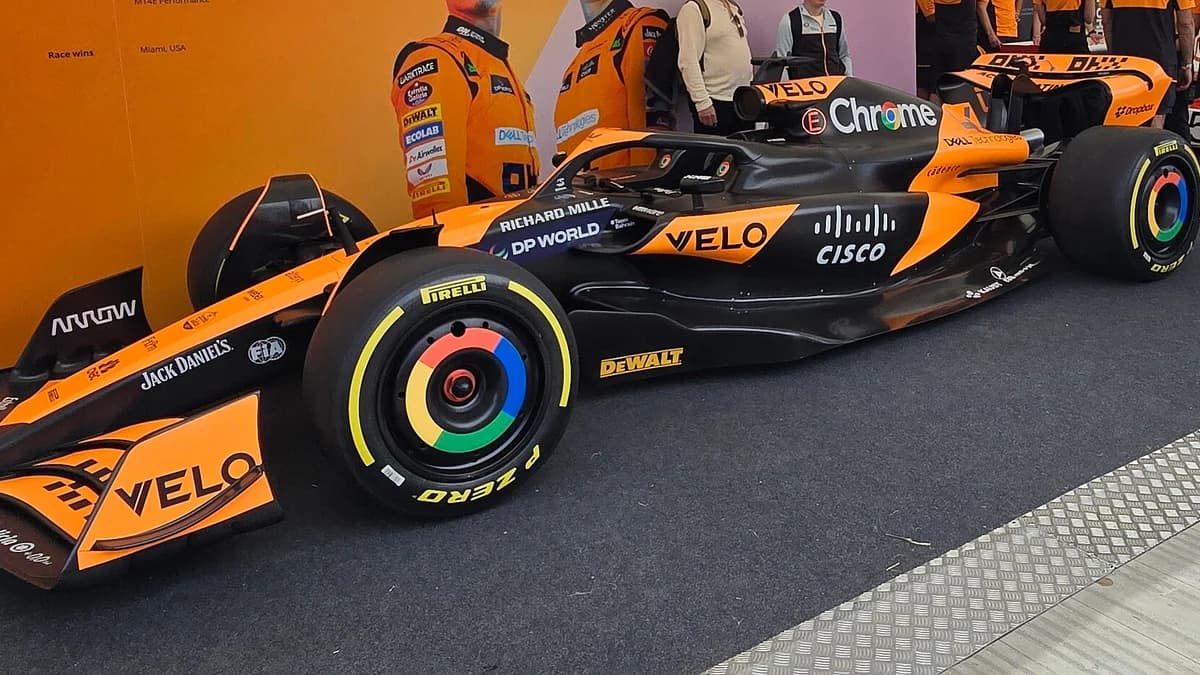
Lando Norris won the Dutch Grand Prix at Zandvoort on 23 August 2026, completing 72 laps in 2:04:44.859. Kimi Antonelli finished 11.536 seconds behind in second, with George Russell completing the podium for Mercedes.
Ferrari occupied the next two positions. Lewis Hamilton finished fourth ahead of Charles Leclerc, while Oscar Piastri brought the second McLaren home in sixth. That left Norris with the victory and Mercedes with two drivers on the podium.
Liam Lawson finished seventh for Red Bull, followed by Nico Hulkenberg, Fernando Alonso and Pierre Gasly in the remaining points places. Max Verstappen was listed as a non-finisher in the official classification, leaving the home favourite without Sunday race points.
The result sheet also records ten-second penalties for Lawson and Franco Colapinto for failing to slow for yellow flags, and for Carlos Sainz for causing a collision. The finishing order cited here is the published classification, which is the relevant reference when comparing drivers' final results rather than their positions at an earlier moment of the race.
Key facts
- Podium: Norris, Antonelli, Russell.
- Norris scored 25 Sunday race points.
- Verstappen did not finish.
P777 Sport analysis
A result with different meanings across the podium
For Norris, the result is first and foremost an individual victory. For Mercedes, placing both cars on the podium provides a different kind of satisfaction: two drivers converted the race into strong finishing positions. These are related but distinct ways to read the same classification. A winning driver and a team with two high finishers can both have positive outcomes without the report needing to declare one simplistic winner of every aspect of the afternoon.
The gap between the winner and runner-up describes the final classification, not a complete lap-by-lap account. A finishing margin can be affected by many developments during a race, so it should not automatically be described as the pace difference that existed on every lap. The official result establishes how far apart the cars finished. Explaining how that margin accumulated requires the separate evidence of the race's progression.
Why the second car matters
Piastri's position makes McLaren's result more nuanced than a headline about victory alone. Team performance is not represented by just its highest-placed car. Each driver faces an individual race, and a full review should retain both finishing positions before drawing conclusions about the team's afternoon. That does not diminish Norris's win; it prevents one excellent result from swallowing the rest of the evidence.
The same principle applies to Ferrari. Two adjacent places in the classification show where its drivers ended relative to each other and the cars ahead. They do not reveal, without further information, whether the drivers followed identical strategies or faced the same interruptions. A useful team comparison starts with the recorded outcomes and adds explanations only when those explanations are supported.
Reading the points places beyond the leading teams
The lower points positions can be significant even when they receive less attention than the podium. A driver who finishes seventh or tenth has completed a different contest from the winner, often against a different group of immediate rivals. Naming those finishers gives the result its full shape and helps supporters of the wider field locate their own team's performance in the record.
A classification also distinguishes cars on the lead lap from those a lap or more behind. That detail can be valuable when comparing results, but it should be read carefully. Being lapped is an outcome of the whole race rather than a standalone diagnosis of one weakness. Without the supporting sequence, it is better to describe the finishing status accurately than to invent a reason for it.
Why the final classification is the reference
Penalties create one of the most common sources of confusion in motorsport reporting. The order seen at a particular moment may differ from the published order after time adjustments are applied. A race report should therefore identify the version of the result it uses. In this case, the cited Formula 1 classification includes the penalty notes and provides a consistent reference for the positions listed above.
There is no need to turn a penalty note into speculation about intent. The official record states the infringement and sanction; that is the appropriate factual boundary unless a separate decision provides more detail. Readers who want to understand a specific incident can then consult the relevant ruling. The main result report can remain focused on how the published classification places the drivers.
The team points tell a second story
Adding the Sunday points produces an instructive comparison. Norris earned 25 and Piastri eight, giving McLaren 33. Antonelli earned 18 and Russell 15, also giving Mercedes 33. Ferrari took 12 through Hamilton and ten through Leclerc, for 22. These are calculations from the cited race classification, not a claim about the full weekend or the live constructors standings. The individual victory and the team points comparison therefore tell different stories.
That arithmetic shows why a second car can be so important. A team can match the Sunday return of the race-winning outfit by placing both drivers high enough, even without taking first place itself. For supporters, it adds a concrete layer to the podium discussion: McLaren supplied the winner, while Mercedes matched its race points. The result rewards both outright success and the combined contribution of two cars.
Points to consider when reviewing the performance
- Start with the published final order when comparing the drivers, especially where a time penalty may affect the classification.
- Separate the final winning margin from claims about pace on every lap. A result sheet records the finish rather than the entire sequence.
- Include both cars when reviewing a team's outcome, so one strong or difficult individual result does not conceal the other.
- Read non-finishing status precisely and avoid substituting an assumed mechanical or driving explanation for the information actually available.
- Keep Sunday race points distinct from any other session in a weekend. A race classification is not automatically the whole championship accounting.
- Compare several completed rounds before describing an enduring trend; a single result supplies one observation rather than a complete season model.
Sources
Like what you read?
Register now and put today's slate to work.