Verstappen Says Engine Penalty Is Coming After Baku ICE Failure
Event / announcement: September 26, 2026
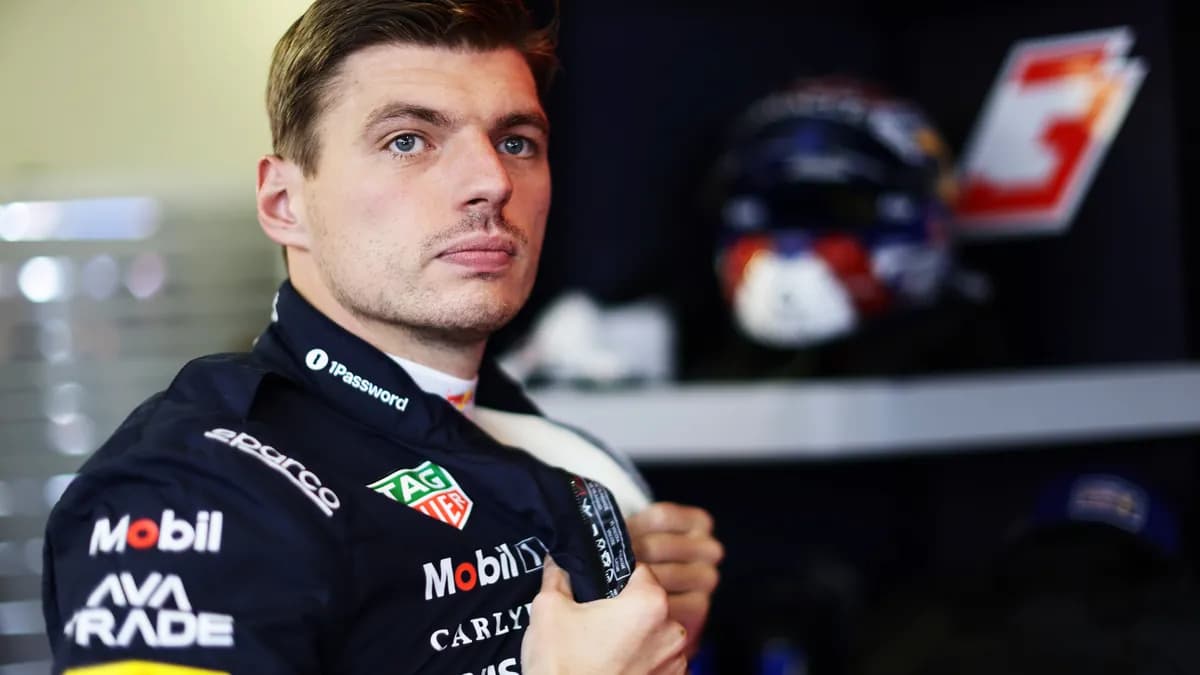
Max Verstappen came within 0.196 seconds of winning the Azerbaijan Grand Prix, but his weekend also brought news Red Bull would rather have avoided. A problem with the internal combustion engine compromised his qualifying, forcing a power-unit change before the race. Red Bull was able to use parts already in his allocation, so there was no grid penalty in Baku. Verstappen, however, has made clear that the penalty has only been postponed.
“Yeah, there definitely has to be a penalty at some point,” the Dutchman said, as reported by GrandPrix.com. The question is no longer whether Red Bull will take a grid drop, but where it will choose to do so over the remaining rounds of the season.
What went wrong in qualifying
Speaking to Autosport and other media, Verstappen explained that the issue was not simply an electrical deployment problem, as it initially appeared. “In Q1, we immediately saw a problem,” he said. “But later it became clear that we really did have a problem with the ICE. It only got worse and in Q3 that engine was no longer working properly.”
The failing combustion engine created a chain reaction through the rest of the power unit. Verstappen described reduced top speed, misfiring, problems charging the battery and heavy clipping as the system tried to compensate. GrandPrix.com reports that he was losing at least half a second on the straights compared with team mate Isack Hadjar. “My battery switched off there,” he said of one phase of the lap. “Because you’re so slow on the straights, you obviously use more battery coming out of the corners.”
Those issues forced him to abandon his second flying lap, costing tyre temperature, which is crucial in Baku. A late yellow flag caused by Lando Norris then prevented a final attempt. Verstappen qualified eighth, while Hadjar was fourth.
- The problem began in Q1 and worsened through each qualifying session.
- Verstappen lost at least half a second on the straights to Hadjar, according to GrandPrix.com.
- The FIA confirmed a new ICE, turbocharger, auxiliary power-unit component and exhaust before the race.
- All replaced parts were within his allocation, so there was no penalty in Baku.
- Verstappen says a grid penalty will still be needed later in the season.
From eighth to within a fraction of victory
With a fresh engine, Verstappen’s race showed what Red Bull might have achieved without the qualifying problem. Starting eighth on medium tyres, he worked his way forward but could not clear Oscar Piastri’s McLaren before the first Safety Car. Red Bull then switched him to softs, and GrandPrix.com’s race analysis reports that he passed Piastri at the restart to take second place.
A second Safety Car, triggered by the restart collision involving Franco Colapinto, Pierre Gasly and Lando Norris, gave him another chance to attack George Russell. Russell defended successfully, but Verstappen kept the pressure on until the final lap. Formula 1 reports that he glanced the wall on the entry to Turn 16 several times as he pushed. When Russell suffered turbo lag on the final lap, Verstappen closed dramatically, but he still fell 0.196 seconds short at the line. Fans voted him Driver of the Day.
The result was Red Bull’s best of the weekend, with Hadjar third to complete a double podium. It was also a reminder of how strong the combination can be when everything works. Verstappen is still looking for his first win of 2026, and Baku was one of his best chances so far.
Choosing where to take the penalty
GrandPrix.com notes that Red Bull has not yet decided which race will absorb the penalty. That choice is a strategic puzzle. Teams usually prefer to take grid drops at circuits where overtaking is easier, or where they expect to be less competitive anyway. Taking the penalty early reduces the risk of further failures, but it could cost points at a race where the car might otherwise have challenged for victory.
The 2026 energy rules complicate the calculation. Verstappen said in Baku that overtaking is harder because “everyone completely drains the battery on the long straight”. Even a circuit that looks good for passing may not guarantee a strong recovery if rivals have similar energy at the same points. Red Bull will need to weigh circuit characteristics, likely pace and reliability risk together.
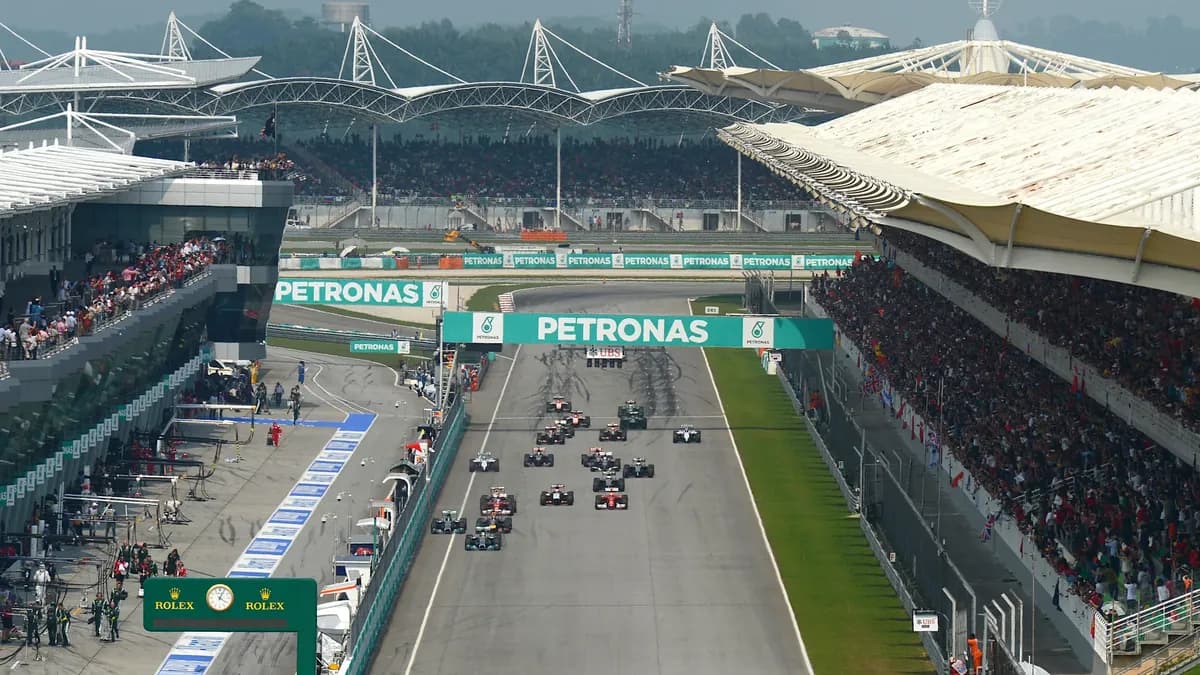
- Whether Red Bull takes the penalty at Sepang, Singapore or a later round.
- How reliable the new Red Bull Ford power unit proves in the heat of Asia.
- Whether Hadjar can continue his strong form alongside Verstappen.
- Whether Verstappen can convert his Baku pace into a first 2026 win.
The championship picture
Verstappen sits sixth in the drivers’ standings on 163 points after Baku, well behind Mercedes’ Kimi Antonelli on 302 and George Russell on 236. A title challenge is unrealistic at this stage, which gives Red Bull more freedom in choosing when to take a penalty. The priority now is to maximise points and develop the car for the future, rather than protect a championship position.
Red Bull’s first season with its own power unit
The Baku failure comes in Red Bull’s first season running its own power unit, developed in partnership with Ford. Building an engine from scratch is one of the hardest challenges in Formula 1, and Red Bull has been competitive in many races, as Baku showed. Verstappen said that the team still had another engine available, but the reliability issue is a reminder that the project is still maturing.
Allocation rules limit how many power-unit components each driver can use in a season before grid penalties apply. Once a driver exceeds that allocation, any further change brings a penalty. By fitting a new ICE, turbocharger, auxiliary component and exhaust in Baku, Red Bull has used up spare parts it may have preferred to keep for later. That is why Verstappen expects a penalty to follow: the team has less margin for any further problems.
The strategic question is therefore about timing. Taking a planned penalty and fitting several fresh components at once can give a driver a healthy pool of parts for the rest of the season. Waiting too long risks a failure in a race, which would cost both points and parts. Red Bull will be weighing those factors carefully in the coming weeks.
Baku showed both sides of Red Bull’s season: genuine race pace, but also reliability concerns. Hadjar’s podium and Verstappen’s near-win suggest the car is competitive at circuits with long straights. The engine failure, however, is a reminder that the new power unit is still maturing. For Malaysian fans heading to Sepang, Verstappen, a former winner at the circuit in 2017, will be one of the drivers to watch, whether he starts from the front or has to fight his way through the field.
Sources
Like what you read?
Register now and put today's slate to work.