Gasly Takes His First F1 Pole Position at Monza
Event / announcement: September 5, 2026
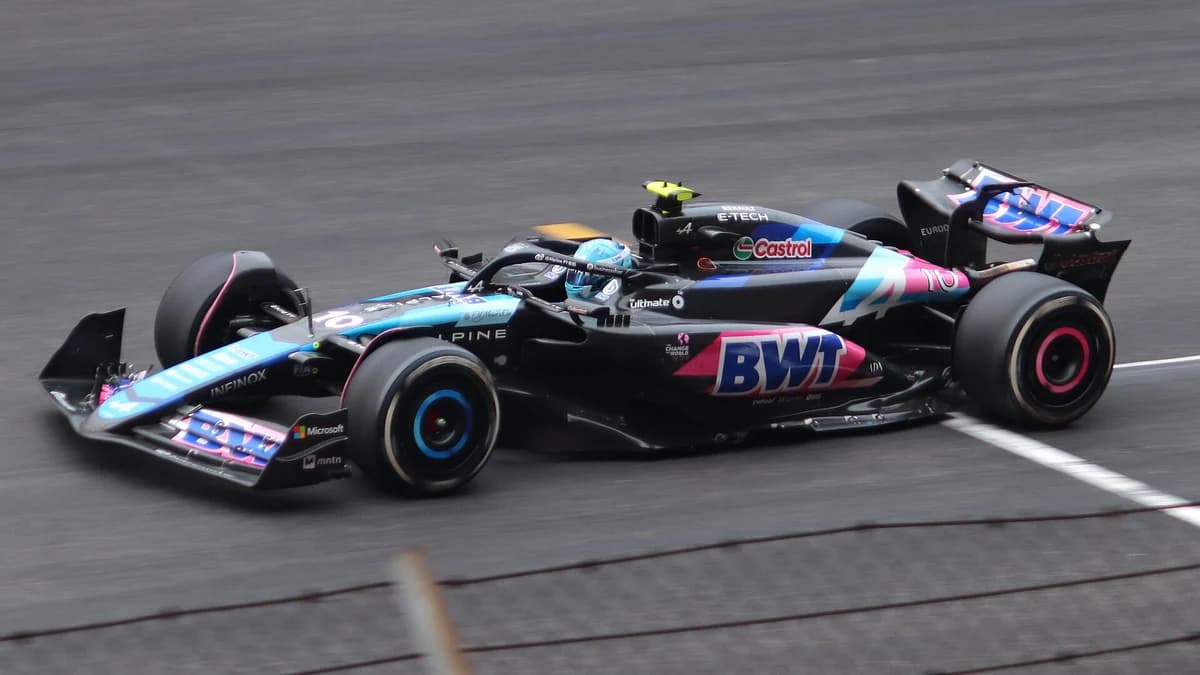
Pierre Gasly secured the first pole position of his Formula 1 career at Monza on 5 September 2026. The Alpine driver finished Italian Grand Prix qualifying ahead of Mercedes' George Russell and McLaren's Oscar Piastri.
Ferrari's Charles Leclerc and Lewis Hamilton placed fourth and fifth, followed by Max Verstappen in sixth. Kimi Antonelli qualified seventh before the application of his engine penalty. Those results put Alpine at the front of the qualifying order for Sunday's race.
Gasly's achievement was a milestone in its own right. Qualifying ranks the field over timed laps and establishes the basis of the starting grid; it does not decide the Grand Prix result. Keeping those two records separate is particularly important on a weekend that also included a grid penalty for one of the leading contenders.
For Alpine, pole provided an opportunity to begin the race with clear track ahead. Converting that opportunity would still depend on the start, race pace, tyre decisions and the rest of the field. This article records the Saturday qualifying outcome, with the Sunday race covered separately in P777 Sport's Italian Grand Prix report.
Key facts
- Qualifying top three: Gasly, Russell, Piastri.
- Gasly's first Formula 1 pole position.
- Antonelli's qualifying position preceded his engine penalty.
P777 Sport analysis
What a first pole represents
A first pole is a distinct milestone because qualifying gives every driver a specific target: complete the decisive timed lap quickly enough to finish ahead of the field. It requires execution within a limited opportunity. The achievement can be recognised without confusing it with a race victory or assuming that the same order will survive a much longer contest. Saturday supplied its own result, and Gasly placed himself at the top of it.
For a team, that result is also visible evidence of what one car and driver combination achieved in the session. It does not automatically describe every aspect of the team's performance or establish that it will be equally strong under all conditions. Qualifying success is a precise claim. Expanding it into a verdict about the entire season would require a much broader record.
One lap and a Grand Prix ask different questions
A qualifying lap is built around immediate execution. The driver needs to bring the car through a sequence of braking points, changes of direction and acceleration zones with very little lost time. Over a race, the task also includes managing repeated laps, other cars and decisions that influence later stages. Excellence in the first task creates an opportunity in the second, but the tasks are not identical.
That difference explains why a qualifying report should avoid promising a result. Starting at the front can reduce the traffic directly ahead at the initial getaway, yet it leaves the leader exposed to a field attempting to challenge. A good launch, a clean first sequence of corners and effective race decisions still have to follow. Those are general requirements of converting pole, rather than a claim about what Gasly would necessarily do.
Why the order behind pole matters
The rest of the leading group defines the immediate competitive context. A pole-sitter does not race against a list of abstract names; the nearby cars create the first pressures and opportunities. Recording the other qualifying positions therefore adds useful information even when the main story is a milestone for the driver at the front. It gives the reader the shape of the session rather than only its winning headline.
The Ferrari positions are also part of that picture, especially for supporters following the Italian Grand Prix closely. They should be stated as session outcomes, not embellished with assumptions about private disappointment or team strategy. A report does not become more informative by assigning emotions that have not been documented. The classification and the circumstances explicitly established by the source are enough to show where the cars stood.
Qualifying position is not always starting position
A grid penalty is an important reason to separate the timed-session order from the final starting grid. The driver can produce one qualifying result and begin the Grand Prix somewhere else after the relevant adjustment. Reporting only the qualifying number can therefore mislead a reader who is trying to understand Sunday's start. The article identifies the distinction where it applies rather than silently treating the two lists as interchangeable.
This is particularly useful for an archive that readers may find after the race. A person comparing Saturday and Sunday needs to know whether an apparent change occurred through a penalty or through on-track progress. Clear wording makes that comparison possible without forcing the reader to reconstruct the entire weekend from unrelated pages. It also preserves the qualifying achievement on its own terms.
How to follow Alpine's next step
A useful race review would start by comparing the initial opportunity with the eventual result, then examine the supported reasons for any change. Did the opening phase preserve the position? What decisions affected the later contest? Which incidents are documented? These are questions for a race report, and they should be answered with evidence rather than filled in from what usually happens at another event.
For the longer season, supporters can look for repeat appearances near the front of qualifying and assess whether the team converts those positions consistently. One pole is a significant achievement even before that pattern exists. Repetition would answer a different question about sustained competitiveness. Keeping those judgements separate allows Gasly's first pole to be celebrated without loading it with claims the session alone cannot support.
Pole changes the opening problem
Starting ahead of the field gives a driver the opportunity to select the initial route without a car directly in front. It also creates a defensive problem: the cars behind can choose how to attack, while the leader has to balance protecting the position with taking an effective line. A compromised first corner can affect the following acceleration, so defending one moment must be weighed against the next part of the sequence.
For Gasly, pole therefore created a valuable opportunity rather than an afternoon free of decisions. The start would be the first test, followed by the separate demands of race pace and strategy. That is what makes a qualifying milestone substantial even before Sunday: the driver has secured the strongest starting opportunity available through the timed session, and the team now has to work out how to turn it into the best possible finish.
Sources
Like what you read?
Register now and put today's slate to work.