
Honda Sets the Pace as 850cc MotoGP Bikes Beat 2026 Race Laps
Event / announcement: September 21, 2026
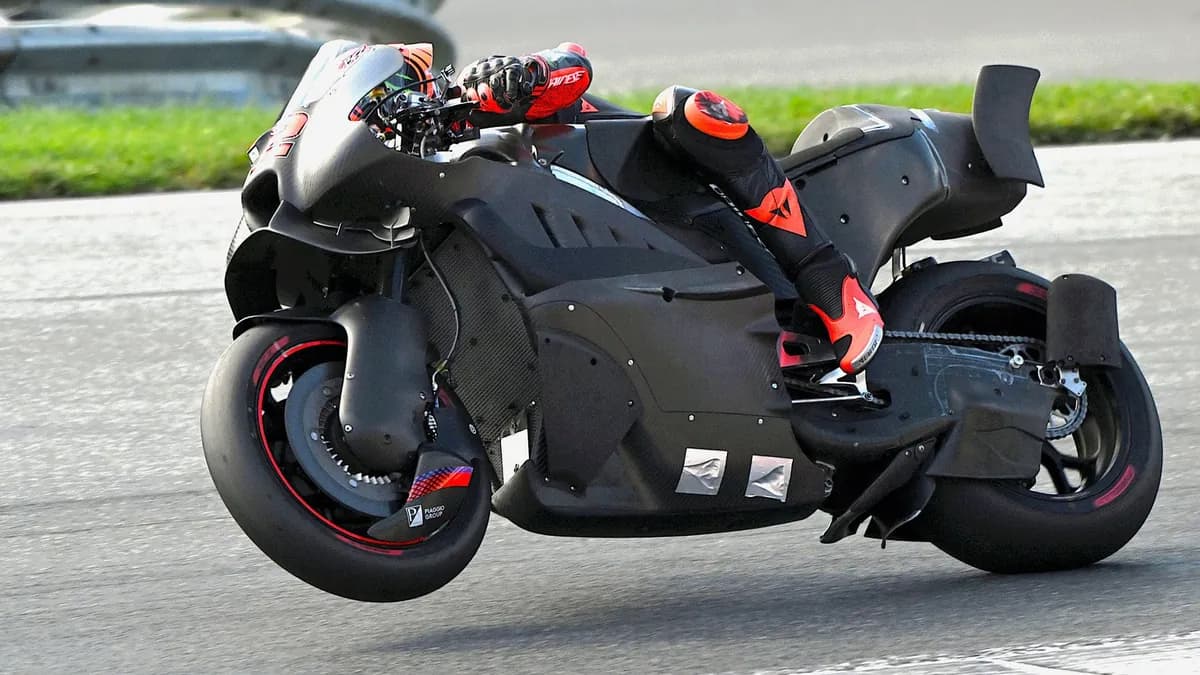
MotoGP’s new 850cc bikes are already at least as fast as the machines they will replace. That was the clear message from the test at the Red Bull Ring on 21 September, the day after the Austrian Grand Prix, where unofficial lap times suggested the 2027 prototypes matched or beat this season’s race pace on Pirelli’s new tyres.
There was no official timing, and bikes ran without transponders, so every lap time should be treated with caution. But reports from Motor Sport Magazine and Motorcycles.News point in the same direction: Honda currently has the edge, followed closely by Aprilia, Ducati and KTM, with Yamaha further behind.
The unofficial times
Diogo Moreira set the pace on Honda’s 850cc RC213V with an unofficial 1:28.4 on a soft rear tyre, according to Motorcycles.News. The reigning Moto2 world champion was making his first outing on the 850, but he already knows Pirelli’s tyres from two seasons in the intermediate class.
- Diogo Moreira, Honda 850: about 1:28.4 on a soft tyre
- Pedro Acosta, KTM 850: about 1:28.8 to 1:28.9
- Johann Zarco, Honda 850: about 1:29.0 to 1:29.1
- Marco Bezzecchi, Aprilia 850: about 1:29.1, reportedly on a hard tyre
- Fermin Aldeguer, Ducati 850: reports from a high 1:28 to a low 1:29
- Franco Morbidelli, Raul Fernandez and Marc Marquez: about 1:29.4 to 1:29.6
- Jack Miller and Toprak Razgatlioglu, Yamaha: about 1:30 to 1:30.5
For comparison, Acosta’s fastest lap in Sunday’s Grand Prix was a 1:29.533 on the 1000cc KTM, and Jorge Martin’s pole time on Saturday was 1:27.917. Motor Sport Magazine reports that the fastest nine riders at the test matched or bettered Acosta’s race lap. Moreira, whose best race lap on Sunday was 1:30.067, was around one and a half seconds faster on the 850.
Why this matters
One of the goals of the 2027 regulations was to slow the bikes. Engine capacity drops from 1000cc to 850cc, aerodynamics are reduced, and ride-height devices, which lower the bike at starts and under acceleration, are banned. If the Spielberg times are representative, the new generation will not be slower in lap-time terms, at least in early testing.
The caveats are important. A test lap on fresh soft tyres with little fuel is very different from a race lap on a full tank. Not every compound choice is known, and without official timing errors are possible. Even so, the direction is significant. Motor Sport Magazine’s Mat Oxley suggests that the 850s are on course to be faster than the 1000s, which would undermine one of the central aims of the costly rule change.
Manufacturer by manufacturer
Honda’s progress is the headline. Moreira, Zarco and test rider Takaaki Nakagami rode for the factory, and Oxley highlights HRC’s aerodynamic work on the smaller front fairing. Aprilia continues to push its aero concept, with a triple element at the end of its front wing designed to reduce wheelies and improve turning. Bezzecchi was its fastest rider, ahead of Raul Fernandez and test rider Lorenzo Savadori.
Ducati’s 850 looks very similar to its current bike from the outside, apart from a slimmer front fairing. Marc Marquez completed only a few laps because his focus is on this season’s title fight, with Aldeguer and Morbidelli also on track. KTM, which has four new riders for 2027, relied on Acosta, test rider Pol Espargaro and Moto2 rider Senna Agius for 850 running, because riders switching manufacturers were not allowed to test the new machines. Espargaro had the only crash of the day.
Yamaha remains the question mark. As at Brno in June, it appeared to run its 850 engine in the current M1 chassis, and Razgatlioglu, Miller and test rider Augusto Fernandez were a second or more off the fastest times. Whether that means Yamaha is behind or holding back a more radical design will only become clear later.
The Pirelli factor
The test also served as important development running for Pirelli, which replaces Michelin as MotoGP’s sole tyre supplier in 2027. Motorcycles.News reports that 18 riders from all five manufacturers took part, with 13 on 850 prototypes and five on adapted 1000s. Track temperatures ranged from 19 to 38 degrees Celsius, allowing a wide range of conditions to be evaluated.
Giorgio Barbier, Pirelli’s motorcycle racing director, said: “The feedback collected was positive overall.” Riders praised grip and stability. The minimum tyre pressure rule will continue, and one open question is whether Pirelli’s MotoGP tyres will drop off in performance during races more than Michelin’s, as often happens in World Superbike.
- Pirelli becomes MotoGP’s sole tyre supplier in 2027.
- Soft, medium and hard slicks were available front and rear.
- Riders switching manufacturers could not test the new bikes.
- Enea Bastianini said testing “was better to be mandatory for everybody.”
What comes next, including Sepang
The development programme continues with manufacturer test teams. According to Motorcycles.News, Aprilia, Ducati, KTM and Yamaha were scheduled to test at Jerez on 7 and 8 October, followed by a Sepang test on 14 and 15 October in which Honda will run with Aleix Espargaro. For Malaysian fans, that means the 850cc Honda is due at Sepang months before the new era officially starts.
The first test with the full 2027 rider line-up is scheduled for 1 December at Valencia, and it will be the first with official timing. Only then will it be possible to compare the new bikes and tyres head to head with confidence.
A test that also shaped the rider market
The session highlighted how contracts affect development. Riders moving to new manufacturers for 2027, including Francesco Bagnaia, Fabio Quartararo, Jorge Martin, Alex Marquez, Ai Ogura, Fabio Di Giannantonio and Enea Bastianini, were not allowed to test their current employers’ new machines, so they will only experience Pirelli’s MotoGP tyres for the first time at Valencia. Acosta was the exception as the only manufacturer-switching rider to take part in both Pirelli tests, riding KTM’s 850 even though he joins Ducati next year.
Until then, the Red Bull Ring times are an early snapshot. They suggest Honda has made real progress and that the new rules may not slow the bikes as intended. With engine capacity, aerodynamics, ride-height devices and the tyre supplier all changing together, the 2027 season is shaping up as one of the biggest technical resets MotoGP has seen.
Sources
Like what you read?
Register now and put today's slate to work.