
Free-Throw Rate: The Quietly Predictable Betting Edge
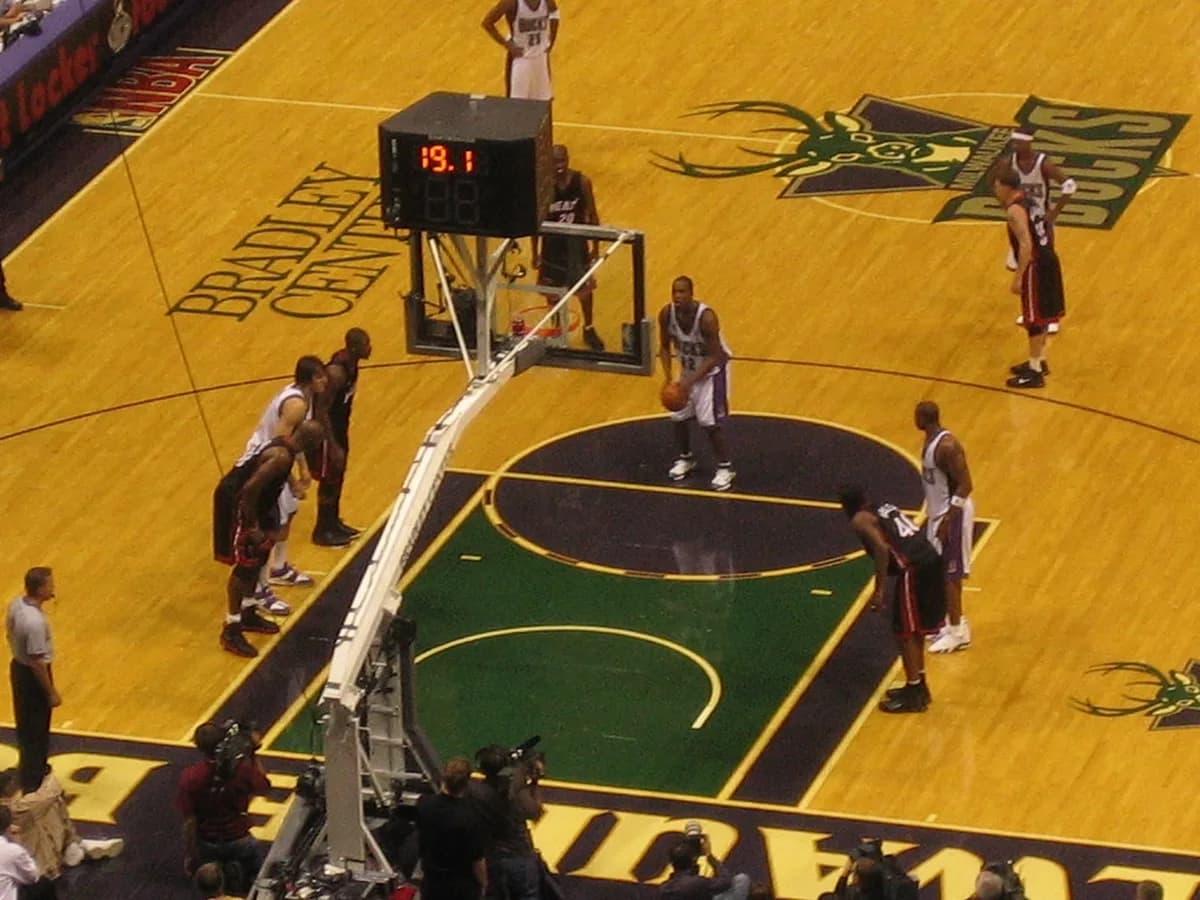
Field goal percentage swings a lot from game to game, shaped by shot luck, shot selection, and a dozen small factors that are hard to predict in advance. Free-throw rate, meaning how often a player or team gets to the line relative to how many shots they take, is considerably steadier, and that stability makes it one of the more underrated inputs in both player props and full-game totals.
The reason it's stable comes down to what actually drives it. Getting to the free-throw line is mostly a function of playing style, drawing contact on drives, drawing fouls in the post, drawing shooting fouls off the ball on cuts, and those tendencies are baked into how a player has always played rather than something that fluctuates wildly with the bounce of the ball on a given night.
Why Foul-Drawing Style Beats Raw Aggression
Not every aggressive player draws fouls at the same rate, which is the part that trips up a lot of casual reads. A player who attacks the rim constantly but finishes with fadeaways and floaters draws far fewer fouls than one who attacks and absorbs contact directly at the basket, even if both are equally aggressive by minutes played or shot attempts. Style of finish matters as much as volume of drives.
Post players tend to have their own version of this. A back-to-the-basket scorer who plays through contact on every post-up draws fouls at a much higher clip than a face-up big who prefers jump shots from the elbow, even when both operate from a similar area of the floor on a similar number of touches.
Referee Assignment Is a Real, Small Factor
Officiating crews are not interchangeable, and some are consistently whistle-happy compared to others, particularly around contact on drives and in the post. This isn't about assuming any bias toward a particular team, it's simply that different crews interpret marginal contact differently, and a player who lives at the free-throw line will generally benefit more from a tighter-called game than one whose scoring comes mostly from jump shots.
- Check a player's free-throw rate trend over their last eight to ten games rather than a single hot or cold stretch.
- Separate drivers who finish through contact from those who finish with floaters or fadeaways, since the two draw fouls at very different rates.
- Note which officiating crew is assigned to a given matchup if that information is available before tip-off.
- Watch for opponents who foul deliberately in the final minutes of a close game, which spikes free-throw attempts independent of style.
- Track how a player's free-throw rate holds up specifically against physical, switch-heavy defenses versus finesse-oriented ones.
How This Connects to Team Totals
Free-throw rate matters for full-game totals too, since made free throws are essentially guaranteed points once a shooting foul is called, unlike a field goal attempt that can still miss. A team that draws fouls at a high rate and shoots them well tends to have a scoring floor that's a little more predictable than a team relying purely on field goal volume, particularly against physical defenses that tend to give up more whistles than finesse-oriented units.
This is also part of why foul-prone opposing personnel matters for a total. A defense missing its most disciplined, low-foul rim protector and replacing him with a more foul-prone backup tends to see free-throw attempts against it climb, which quietly nudges an opponent's scoring floor upward even before accounting for any drop in raw defensive quality.
Common Mistakes When Betting Free-Throw Rate
A frequent mistake is treating a player's free-throw rate as fixed regardless of matchup, when it actually shifts meaningfully depending on the physicality of the specific defender or defense they're facing that night. A player who gets to the line often against a passive, drop-coverage defense may see that number shrink noticeably against a defense that funnels drives into a genuine rim protector willing to contest without fouling.
Another is ignoring free-throw shooting percentage entirely once a player is getting to the line. Getting fouled often is only half the equation for a points prop; a player who draws a lot of contact but shoots poorly from the stripe leaves real points on the table compared to one who converts those trips at a high rate.
A Free-Throw Rate Checklist
- Track free-throw rate over a recent multi-game window rather than a single standout or quiet performance.
- Distinguish contact finishers from finesse scorers when projecting how a matchup will affect foul-drawing.
- Factor in officiating crew tendencies when that information is available ahead of tip-off.
- Check free-throw shooting percentage alongside free-throw rate, since getting to the line only pays off if the shots go in.
- Watch for injuries to disciplined rim protectors, which tend to raise an opponent's free-throw attempts even without a big shift in overall defense.
Free-throw rate rewards the kind of patient, repeatable tracking that a lot of flashier stats don't need, because it doesn't swing nearly as much from night to night. Once you've built a sense of which players and teams live at the stripe and which physical matchups amplify that tendency, it becomes one of the more reliable pieces of a props or totals model.
It's also worth watching how free-throw rate shifts late in close games specifically, since deliberate fouling strategies in the final minute or two can inflate attempts well beyond what a player's normal in-game rate would predict, and that late spike is worth separating from genuine, earned free-throw volume when reviewing how a prop actually cashed.
Age and physical style also interact with this stat in a way worth noting. Younger, more explosive slashers often draw fouls at a high rate early in their careers simply through sheer athleticism, then see that rate evolve as they add a mid-range game and start finishing over contact rather than through it. Tracking how a player's free-throw rate trends year over year, rather than assuming it's a fixed part of his game, helps separate a genuine long-term shift in playing style from a short, matchup-driven blip.
It's worth building a simple personal reference of which players in the league draw fouls at an unusually high or low rate relative to their overall shot volume, since that list changes slowly enough to be useful across an entire season. Cross-referencing that reference against the specific defense a player is about to face turns free-throw rate from a background statistic into one of the more actionable, repeatable checks available before locking in a props ticket.
Like what you read?
Register now and put today's slate to work.