Harden's Cleveland Return Gives Cavaliers Continuity for 2026-27
Event / announcement: September 8, 2026
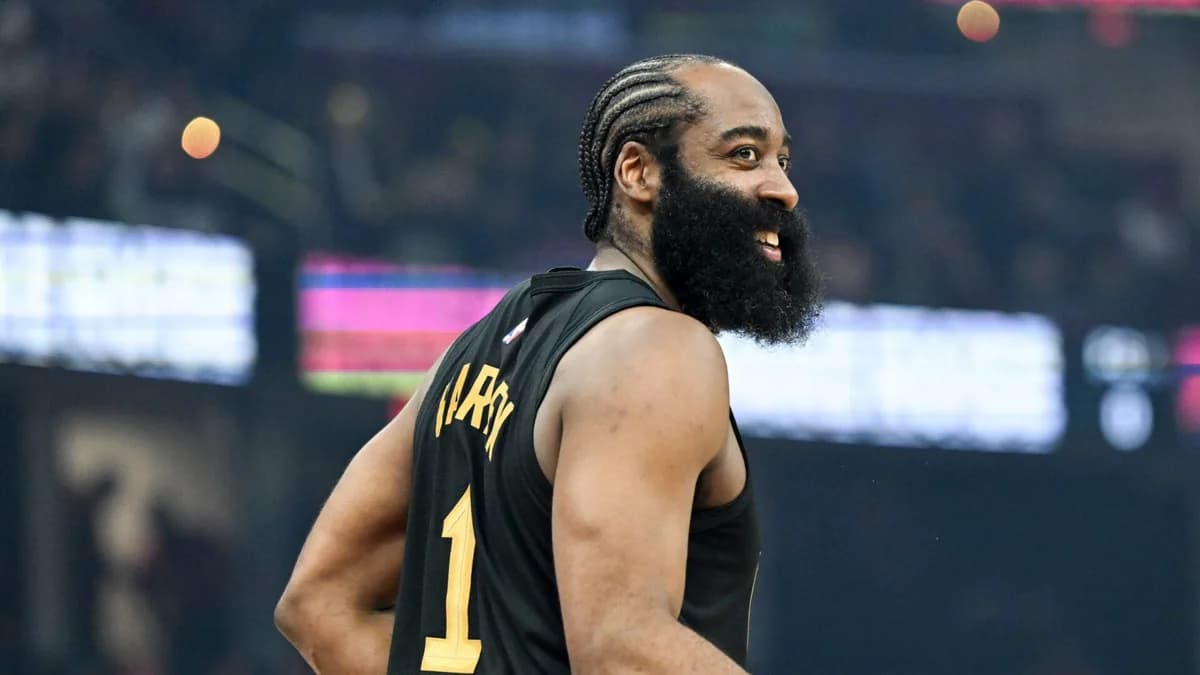
Cleveland confirmed James Harden's return on 8 September, keeping an established creator at the centre of its plans for the new NBA season. The announcement followed August reporting that Harden had agreed to a three-year, $97 million contract with the Cavaliers.
USA Today reported the agreement on 20 August. The reported structure includes a player option in the final season, while Harden's return preserves a familiar partnership with Donovan Mitchell. The immediate basketball consequence is continuity: Cleveland can prepare around a returning ball-handler rather than spend the opening weeks replacing his responsibilities.
What the move changes
- Cleveland retains Harden for the next stage of its project.
- The agreement was reported in August and subsequently confirmed by the team.
- The reported deal runs for three seasons.
- The Cavaliers keep a major source of half-court creation alongside Mitchell.
- The next task is to turn that continuity into more effective team possessions.
Analysis: creation is about the second defender
A high-level ball-handler does more than beat the player directly in front of him. He can make a second defender move, forcing the rest of the defence to decide which space it is willing to leave. That is often where the most useful passing opportunity appears.
In a screen action, the first decision may belong to the defender guarding the ball. The next belongs to the defender responsible for the screener, followed by the players protecting the lane and the shooters. An effective creator reads those connected reactions and chooses the pass or finish that the defence has made available.
The supporting players are essential to that process. A screener must arrive at a useful angle, a receiver must be ready to act and the players away from the ball must preserve enough space for the action to develop. Retaining the creator keeps an important part of the structure in place, but the quality of the structure still depends on all five players.
Continuity can improve the timing of simple actions
Familiarity is valuable when it reduces hesitation. A teammate who recognises when a pass is likely to arrive can prepare the next action earlier. A screener who understands the ball-handler's preferred angle can create a cleaner route into the possession. Those small adjustments can make an offence more efficient without requiring an entirely new playbook.
The benefit is not automatic. Familiar combinations can also become predictable if the team repeats them without responding to the opponent. The useful form of continuity preserves shared understanding while adding enough variation to keep the defence making decisions.
For Cleveland, that means examining the actions that already work and identifying why they work. The aim should be to reproduce the advantage, not simply repeat the shape of the play. A different entry pass or screening location may create the same useful problem for the defence in a less predictable way.
Sharing creation changes the defensive workload
When a team has more than one player capable of initiating an attack, it can change the point from which pressure begins. The opponent cannot always load its preferred defenders towards the same ball-handler in the same location. That creates an opportunity to move the defence before the main action starts.
The challenge is to make shared creation feel connected rather than alternating between separate possessions. One player may begin the move and another may receive after the first advantage has already appeared. That can be more difficult to defend than a sequence of isolated attacks against a fully set opponent.
This is the important basketball question around the returning partnership. The names establish the available talent. The quality of the possessions will depend on how often the team can connect those talents within the same sequence, particularly when the opponent takes away the first option.
The next pass has to remain a threat
An offence loses value if the first successful pass reaches a teammate who cannot do anything useful with it. The defence can then recover and treat the action as a temporary inconvenience rather than a real problem. A dangerous next pass keeps the possession moving towards a shot, a drive or another defensive rotation.
This is why spacing should be understood as a set of decisions rather than a static picture. A player in the corner may need to remain there to occupy a defender. At another moment, a cut or relocation may be the action that turns a small opening into a clear chance. The timing depends on what the ball-handler and defence are doing.
For the Cavaliers, the most useful supporting contributions may therefore be visible before the shot. Watch which players remain ready, how quickly they use an advantage and whether they can continue the possession when a closeout removes the immediate attempt.
Defensive balance still matters
An effective attack should also consider what happens if the shot misses or the ball is lost. The positions of the players outside the main action influence whether the opponent can break quickly. A team that repeatedly creates good chances but gives away easy transition opportunities may fail to gain the full benefit of its offensive work.
That balance is a team responsibility. It involves shot selection, floor positioning and the first reaction after a turnover. It cannot be solved solely by asking the primary creator to generate a better possession next time.
What to watch as Cleveland prepares
- Whether the returning combinations create advantages earlier in possessions.
- How often the first pass leads to another useful action.
- Which lineups maintain spacing and defensive cover together.
- How the team responds when opponents force the ball away from its preferred initiator.
Harden's return gives Cleveland a familiar starting point. The value of that continuity will be expressed in the details: more decisive supporting actions, better connections between creators and a structure that remains functional when the defence changes its approach. The contract settles an important roster question. The season will show how effectively the Cavaliers use the answer.
Sources
Like what you read?
Register now and put today's slate to work.