NBA TV Announces 60-Game Schedule for the 2026-27 Season
Event / announcement: September 3, 2026
NBA TV has announced a 60-game regular-season schedule for 2026-27, completing the league's national television programme. The official release on 3 September confirmed an opening doubleheader on 24 October and a selection of games extending through the season.
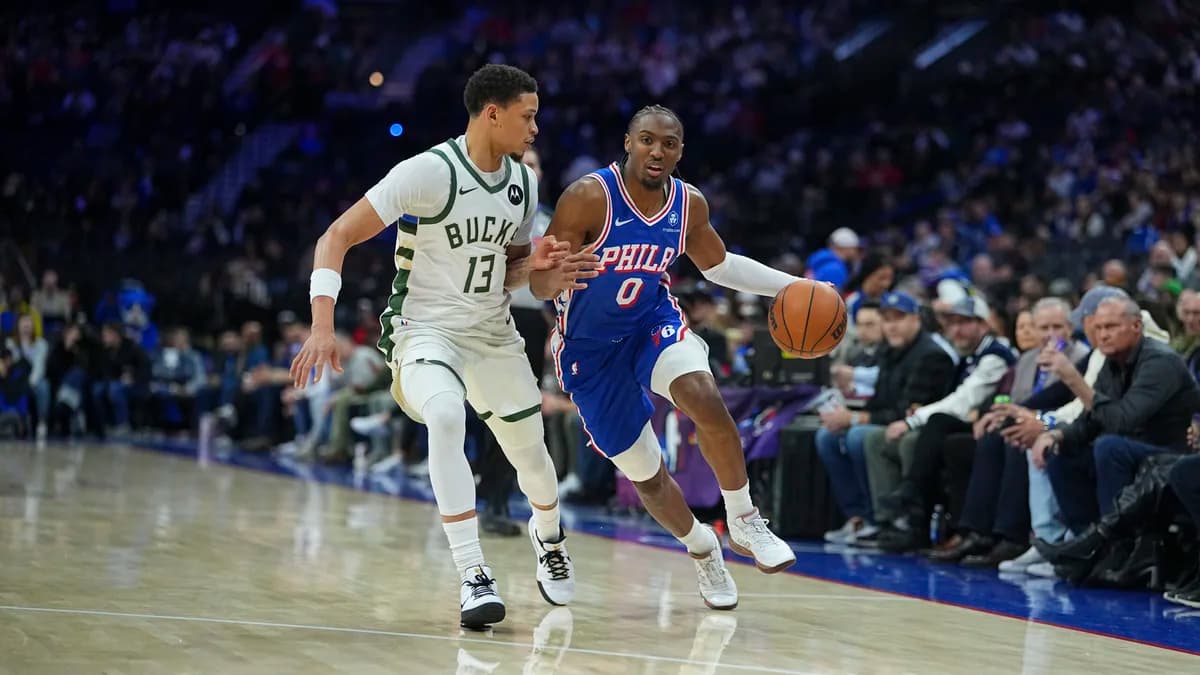
The opening night pairs Philadelphia with Milwaukee before Golden State visits Phoenix. The schedule also includes Denver against Indiana in Mexico City on 7 November and New York's visit to Cleveland later that day. For viewers, the announcement creates a useful set of dates to follow as teams begin putting their new-season plans into practice.
Selected dates from the announcement
- 24 October: 76ers versus Bucks, followed by Warriors at Suns.
- 25 October: Toronto visits Minnesota.
- 7 November: Nuggets versus Pacers in Mexico City, then Knicks at Cavaliers.
- 31 December: Spurs at Hornets and Knicks at Suns.
- 2 January: a tripleheader involving New York, Denver, Dallas, Atlanta, Boston and Portland.
The release also confirmed selected preseason coverage, beginning with Toronto against Miami on 3 October.
Analysis: an early-season game answers limited questions
The first televised meetings are useful because they show how a team's plans look against live opposition. A coach can discuss intended roles throughout the offseason, but the court reveals who brings the ball up, which players share minutes and where the first advantage is meant to come from.
Those observations should be separated from a judgement about the entire season. A new combination may need time to establish its timing. A player can miss good shots while making effective decisions, or score difficult attempts that do not represent a sustainable attacking pattern. The result matters, but it is only part of the evidence.
The most revealing early question is often whether the team has a clear next action when its first option is stopped. An offence that can move from one decision to another remains functional under pressure. One that repeatedly resets may still be learning how its pieces fit together.
Watch combinations rather than reputations
A prominent matchup naturally draws attention to the best-known players. Their individual performances will influence the result, but the supporting combinations often explain why those performances become easier or harder. Spacing, screening and the ability to make the next pass can determine how much work the leading scorer must do.
The same applies defensively. A successful possession may begin with a defender forcing the ball towards help and end with another player collecting the rebound. Looking only at the final contest at the rim can miss the decision that made the shot difficult in the first place.
Televised games provide an opportunity to follow those connections over several possessions. Notice whether the same group can create a useful shot repeatedly, and whether it can defend without requiring an exceptional rescue every time the first line is beaten. Those patterns tell more about the team than a single highlight.
Why different points in the season offer different evidence
An autumn meeting and a winter rematch can look very different even when many of the players are the same. Teams may have changed their rotations, opponents may have identified a weakness and the players may understand their responsibilities more clearly. A schedule gives supporters a way to observe that development over time.
One useful approach is to keep the initial question consistent. If a team struggled to create an outlet against pressure in October, look for how it handles the same problem later. Has a player moved to a different position? Is the first pass arriving earlier? Does the attack now have another route when the preferred option disappears?
This makes the viewing experience more informative than simply comparing two final scores. The result can change for many reasons, including shooting variance. A specific improvement in the way a team handles a recurring problem is stronger evidence that its work has produced a useful response.
International games have a distinct setting
A game staged outside the teams' usual home markets gives supporters in another location access to the regular-season competition. The sporting task remains the same: prepare for the opponent and execute through the full game. The setting adds its own atmosphere without changing the need for clear decisions on court.
For viewers following from elsewhere, it is worth distinguishing the event date from the local time at which the broadcast begins. A fixture listed on one calendar day in North America may appear on the following morning in Malaysia. The broadcaster's current listing is the most useful final check close to tip-off.
The September release describes NBA TV's announced coverage. It should not be read as a guarantee that every listed game will be available through the same provider in every country. Local schedules and access arrangements need to be checked separately when planning what to watch.
A practical viewing checklist
- Confirm the local start time rather than copying the date alone.
- Check the current lineup and availability information close to the game.
- Pick one tactical question to follow across several possessions.
- Compare recurring patterns before drawing conclusions from a short run of shots.
- Revisit the same team later to see which early issues have changed.
This approach is useful whether the game is a major star matchup or a less familiar pairing. Basketball often becomes clearer when the attention moves from the outcome of one possession to the sequence that produced it.
The schedule announcement gives that viewing plan a structure. Early games will show the first working versions of the new-season teams, while later dates offer opportunities to judge their development. The fixtures are confirmed events to anticipate, not results to predict in advance. The interest lies in watching how each team turns its preparation into decisions that hold up against an opponent trying to take those options away.
Sources
Like what you read?
Register now and put today's slate to work.