Celtics Introduce Paul George and Mike Conley Ahead of New Season
Event / announcement: September 15, 2026
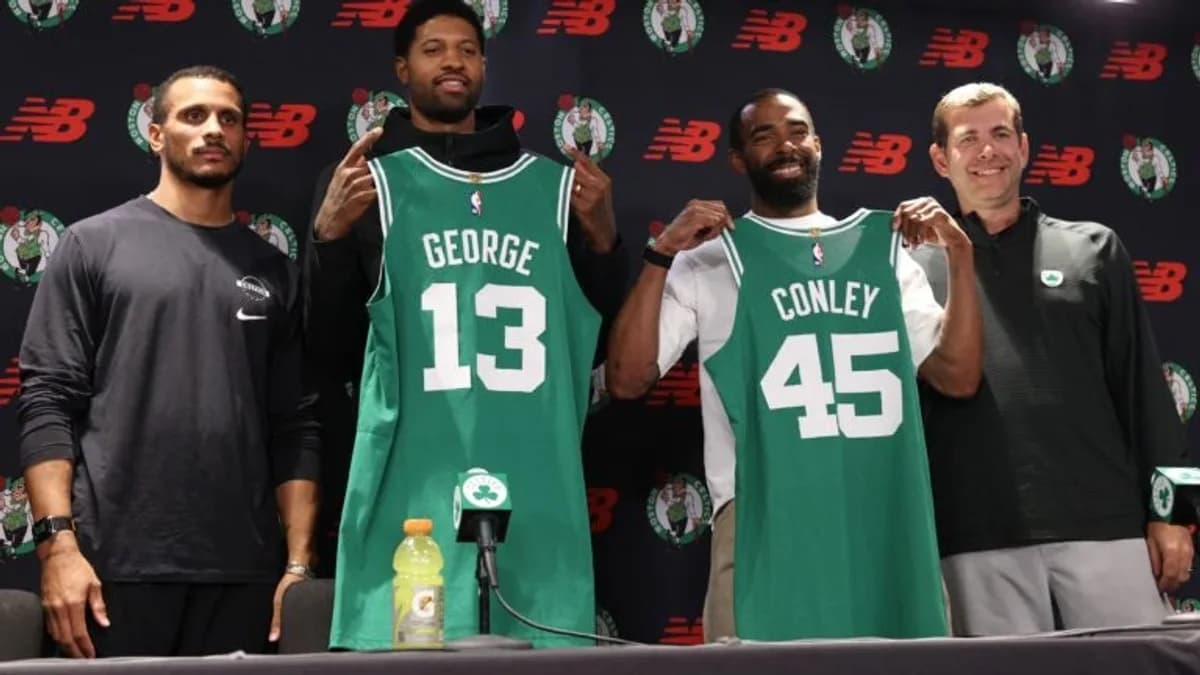
The Boston Celtics introduced Paul George and Mike Conley at the Auerbach Center on 15 September, putting two of their veteran additions in front of the media before the new season. Brad Stevens and Joe Mazzulla joined the players as the club outlined the next stage of its preparations.
The press conference gave the arrivals a public starting point with Boston. George discussed helping Jayson Tatum, while the organisation highlighted the experience both players bring. Mitchell Robinson, another addition who had been expected at the event, was absent for personal reasons.
The main developments
- Boston formally introduced George and Conley at its practice facility.
- Stevens and Mazzulla discussed the additions alongside the players.
- George described his role in relation to supporting Tatum.
- The event followed the offseason moves that brought the veterans to Boston.
- The next stage is integrating their skills into the team's working lineups.
Analysis: supporting a leading scorer is an active role
Helping a team's primary option does not simply mean standing away from the ball and waiting. A supporting creator can change the defence before the leading scorer receives, attack the space left by extra attention or take responsibility for a possession when the preferred route is unavailable.
That can make the whole attack less predictable. If every possession begins with the same player in the same area, the opponent can prepare its help early. A second credible threat gives the team more ways to reach its strongest actions and can make the defence reveal its intentions before the final decision.
The important question is how those responsibilities connect. A team benefits when one player's action creates a better opportunity for the next, rather than when several skilled players take turns beginning against a fully organised defence. The introduction establishes the available personnel; practice and games will show how the relationships develop.
Conley's position can influence the pace of a possession
A point guard's work includes deciding when the team should move quickly and when it needs a more controlled entry into the attack. Those choices affect where teammates receive the ball and how much of the possession remains when the main action begins.
The advantage is often subtle. An early pass may allow a scorer to catch while his defender is still adjusting. A brief delay may give a screener time to reach the correct angle. The ball-handler is coordinating those details while reading whether the opponent is protecting the lane, pressuring the ball or preparing to switch.
For a team introducing new combinations, that organisation can help reduce unnecessary uncertainty. Players still need to learn one another's preferences, but a clear start to the possession gives them a shared structure in which to make the next decision.
Veteran additions do not remove the need for adjustment
Experience can make a player quicker to recognise a familiar problem, but a new team still has its own vocabulary, spacing and defensive principles. The player must learn which parts of his previous approach transfer directly and which need to change.
The coaching staff faces a related task. It needs to use the skills that made the player valuable without assuming the new setting should reproduce his previous role exactly. A successful integration can preserve the strength while changing the way it is accessed within the team's wider structure.
This is why the early weeks matter beyond the results. The team is establishing the timing of its combinations and learning how its players respond to different instructions. Some of the most useful progress may appear in fewer hesitations and cleaner decisions before it becomes obvious in a final score.
Spacing should create choices, not empty floor
Good spacing is not just a matter of keeping players far apart. The positions have to create useful passing routes and make defensive help costly. A player who is technically open but difficult to reach may not provide the same value as one who is ready to receive through a clear passing lane.
Movement can improve that relationship. A relocation after a pass may give the ball-handler another option, while a cut can force a defender to choose between protecting the rim and staying attached to a shooter. The right action depends on what the defence has already committed to stopping.
For Boston, the value of the new combinations will partly depend on how quickly those choices become shared. The player with the ball and the player away from it need to recognise the same opening. When they do, an advantage can be used immediately rather than disappearing during a moment of uncertainty.
Defensive coordination will shape the useful lineups
An attacking combination also needs a workable defensive plan. The team must decide how it handles screens, which matchups it wants to protect and how it recovers when the first defender is beaten. Individual experience helps, but the five players still need to make compatible decisions.
The most revealing early evidence may come when the opponent changes its approach. Can the lineup communicate a different coverage without confusion? Does the help arrive from the expected position? Can the group finish the possession with a rebound after forcing a difficult shot?
Those questions connect roster construction to actual performance. A list of accomplished players creates possibilities. The lineups that can combine their skills at both ends are the ones that turn those possibilities into a dependable team.
What to follow in Boston's preparation
- How often the first action creates an easier decision for another scorer.
- Which combinations establish clear spacing and passing routes.
- How the guards organise possessions when the preferred play is denied.
- Whether defensive communication remains consistent as lineups change.
George and Conley now have a clear public beginning with the Celtics. The next work is less ceremonial: learning the team's language, building useful combinations and making the offence and defence function together. Their experience gives Boston resources to use. The success of the additions will depend on how effectively those resources become connected decisions on the court.
Sources
Like what you read?
Register now and put today's slate to work.