Taj Gibson Retires After 17 Seasons and Returns to Bulls as Coach
Event / announcement: September 14, 2026
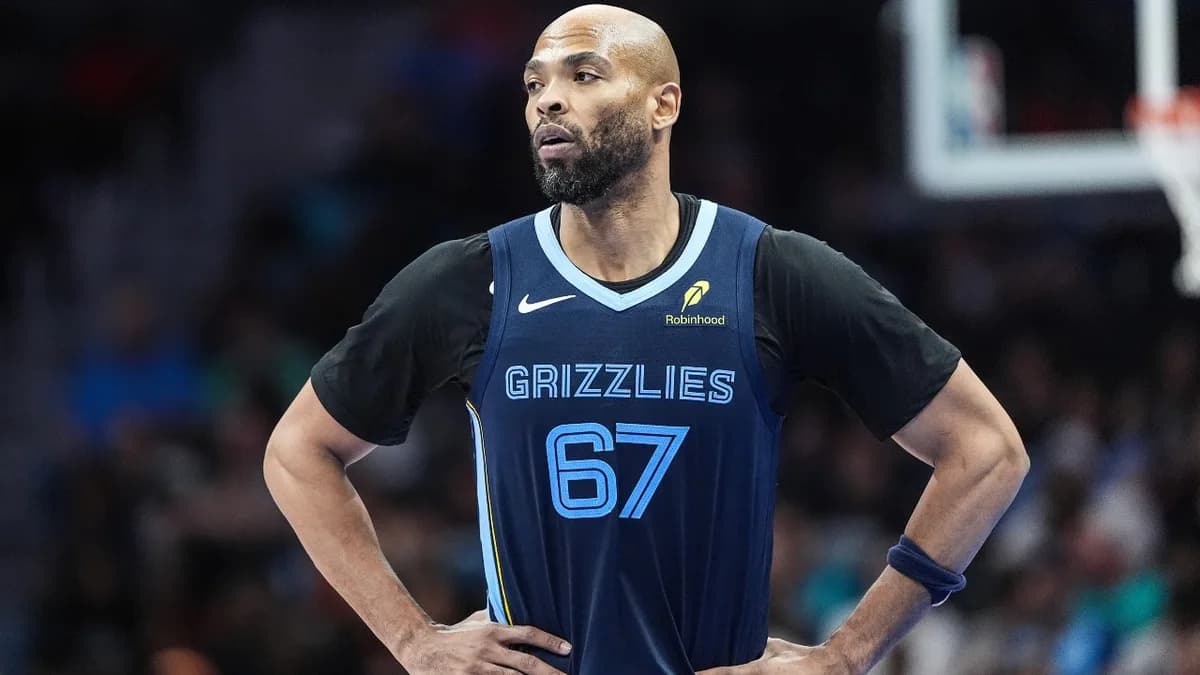
Taj Gibson has ended his NBA playing career after seventeen seasons and joined the Chicago Bulls as an assistant coach. The move, announced on 14 September, brings him back to the franchise that selected him in the 2009 draft.
Gibson joins Tiago Splitter's first Chicago staff after a career spanning 1,012 NBA games. The Associated Press reported career averages of 8.3 points and 5.7 rebounds. His final transition takes him from a long-serving frontcourt player to a role helping prepare the next group of players.
The new role
- Gibson retires from playing and returns to Chicago as an assistant.
- He will work on Splitter's coaching staff.
- The Bulls were his first NBA team.
- His playing career included eight franchises.
- The appointment keeps him in the game through a different set of responsibilities.
Analysis: experience has to become instruction
A long playing career gives a coach a large collection of situations to draw upon. The challenge is turning that experience into an explanation another player can use. Recognising the right decision instinctively is different from describing the cues that make it the right decision.
A young big man, for example, may need more than an instruction to set a better screen. He needs to understand the angle, the timing and the position of the defender before contact. A coach who can break the action into those parts gives the player a way to improve it deliberately rather than simply try harder.
That is where a former player's perspective can be useful. He can connect the instruction to what the action feels like on court and explain why a small adjustment changes the result. The teaching becomes more concrete when it addresses the problem the player is actually encountering.
Frontcourt work often happens before the visible moment
A rebound is recorded when a player secures the ball, but the advantage may have been created earlier through positioning. A successful defensive possession can depend on a big man moving into the right space before the pass arrives. Those actions are easy to overlook because the final event is more obvious than the preparation behind it.
Coaching those details requires attention to the sequence. Where was the player when the shot went up? Which opponent needed to be located? Was the body position established early enough to make the rebound a controlled action rather than a late contest?
The same method applies to screening and defensive coverage. A small improvement in anticipation can reduce the need for a difficult recovery. The player becomes more effective by arriving at the right decision earlier, not simply by attempting a more athletic response after the problem has already developed.
A veteran's message still needs to fit the current team
What worked in one system may not be the instruction required in another. A former player has to connect his experience to the principles the current coaching staff wants to use. Otherwise, players can receive several individually reasonable messages that do not fit together.
That makes communication within the staff important. The assistants need a shared vocabulary for the main actions and a clear understanding of which details take priority. A player benefits when the individual coaching session reinforces what will be asked of him during team practice and games.
For Gibson, the new role therefore includes learning as well as teaching. He brings experience from the court, while the staff provides the framework in which that experience will be applied. The strongest contribution will come from making those two parts work together.
Helping players with changing roles
An NBA season can ask a player to move between different responsibilities. A starter may spend time with a second unit, a reserve may be asked to close a game and an injury elsewhere can change the type of opponent a player must guard. Preparation has to make those adjustments manageable.
A coach can help by explaining the purpose of the role rather than only its label. A player entering for a short stretch may need to stabilise the defence, create space with screens or keep the ball moving. Understanding that purpose makes it easier to contribute without forcing an action that the possession does not need.
This is especially valuable for players whose minutes vary. Their opportunities may be brief, but the decisions within those minutes still matter. Clear preparation can reduce the feeling that every touch must become a personal audition and keep the player connected to the team's task.
Leadership changes form on the bench
A teammate can influence a group through example, conversation and the way he responds to a difficult stretch. A coach uses some of the same skills, but the responsibility is different. He must decide when to intervene, what to emphasise and how to make the instruction useful to more than one player.
The best message is not always the longest one. During a game, a player may need a single clear adjustment that can be applied on the next possession. During practice, there may be time to examine the action in detail. Choosing the right level of explanation is part of the work.
What a useful coaching contribution looks like
- Players understanding the cue behind an instruction, rather than memorising a phrase.
- Individual skill work connecting directly to the team's system.
- Better preparation for changes in role or matchup.
- Clear feedback that a player can apply on the next repetition.
Gibson's return to Chicago has an obvious connection to his playing history, but the appointment is also a current basketball decision. The Bulls are adding someone whose experience can become a teaching resource if it is translated effectively. His playing career is complete; the next contribution will be measured through the preparation and decisions of the players he helps coach.
Sources
Like what you read?
Register now and put today's slate to work.